
Vox Populi
A curated webspace for Poetry, Politics, and Nature with over 6,000,000 visitors since 2014 and over 9,000 archived posts.
Sara Hegy: Even the Longest Winters End
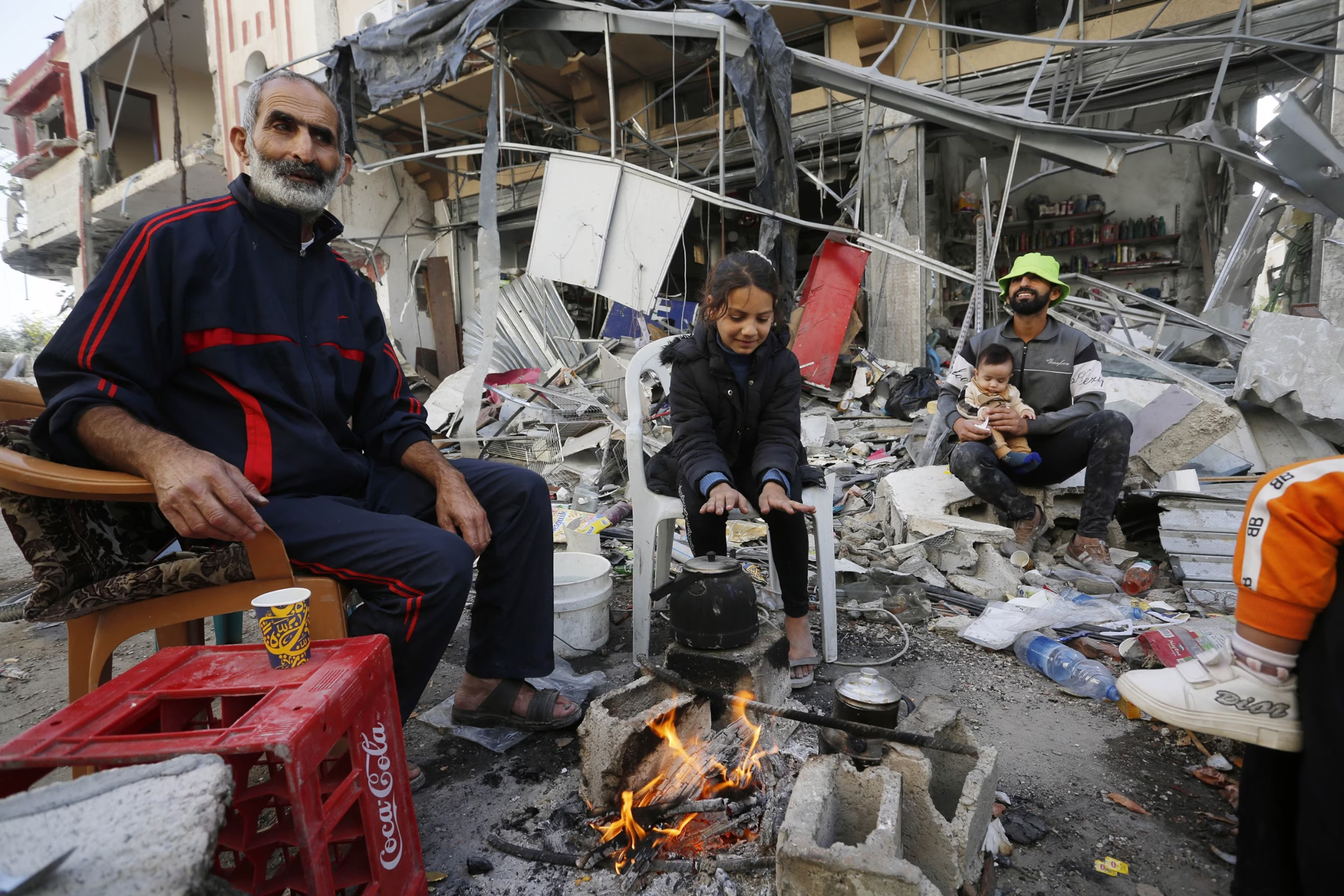
Winter in Nuseirat Refugee Camp, Gaza
The tent is quiet, save for the whistle of the wind slicing through the thin walls and the occasional patter of raindrops. My nights in the tent in Nuseirat refugee camp are endless. They feel heavy, with a cold that seeps into my bones despite my five mismatched layers of clothes, all the clothes I own.
How did I fall asleep before the war that uprooted our lives? Effortlessly, cradled by the warmth of my bed and the comfort of familiar walls. Now each attempt to close my eyes feels like a battle against the biting chill and the relentless ghosts of a life I once knew.
I live in a tent with my mother, and it is all we have got. Each night, we pull our old worn-out mattresses close together, huddling for warmth. The next day, our breath creates tiny clouds in the icy air as we whisper “good morning,”showing only our faces from beneath our blankets to greet each other. Moving feels impossible until the sun rises, its faint warmth coaxing us out of the cocoon we’ve created against the cold.
The day doesn’t bring much relief because the tent offers no privacy. I hear my cousin in the tent next to ours complaining she hasn’t slept all night because of the freezing weather. Her voice sounds weary: our struggles are shared yet solitary.
This cold doesn’t just invade my body, it steals the simplest joys of life. Studying in the early morning before the chaos of the day begins is another challenge. My fingers stiffen, and my hands feel so fragile that holding a pen tightly enough to write becomes an impossible task. I feel that my frozen fingers will break with the slightest movement.
But my studies are more than routine; they’re a lifeline, a defiance against the war that has stripped me of almost everything I cherished. The cold bites at my resolve, but I force myself to read, to hold the pen.
Before this war winter meant something entirely different. It was the season to sit around the fire with mama, sipping Sahlab (milk pudding), listening to the elders’ stories. Rain wasn’t a threat; it was replenishment for the earth, a sound that lulled me into peace and happiness. Now, the first drop of rain sends me hurrying to inspect the tent’s fragile seams, fearing leaks that could soak our few possessions. Another unbearable loss.
I miss my friends, too—the warmth of our shared laughter, the way we used to run from a downpour to watch it from some safe place together. That circle of joy feels shattered now. There is no safe place in Gaza.
Some of those friends are in Egypt, some have remained in northern Gaza, while others are scattered across the south. Visiting those who are nearby is no longer a simple matter. It would take hours to travel what used to be a half-hour journey and cost more money than I can spare and risk the wartime dangers of being robbed, raped, or killed.
The physical toll of this refugee life weighs on me as well. Ever since the temperature began to plummet, the cold of the tent has left me in a constant state of illness. The flu lingers, seemingly permanent, and I’ve been suffering from persistent backache for weeks now. Recovery from even such minor sickness takes far longer than it should because I cannot find the medicines I need. My body, worn down by 14 months of war, feels more vulnerable with each passing day.
The psychological weight of these days and sleepless nights is as heavy as the biting cold. The tent, though it offers minimal shelter, feels like a prison that traps me with impossibly distant memories. Ghosts of my past creep intomy mind: a heated home, the security of being surrounded by four solid walls, and the simplicity of closing my eyes without worry. Each memory is a double-edged sword, bringing both comfort and pain.
Yet even here there are moments that give me courage. Every morning, as my mother and I exchange smiles from beneath the blankets, I feel a spark of defiance against the bleakness around us. In the scratch of my pen against paper—despite my frozen fingers—I mumble to myself that this knowledge I am gaining is a form of power, that the act of writing itself is resistance. In those moments there is hope that even the longest winters end.
Sara Hegy is a 21-year-old English literature student and freelance journalist based in Gaza. She has contributed to Electronic Intifada, We Are Not Numbers, and Palestine Chronicle. In addition to her journalism, she has worked as an English language mentor and translator.
Copyright 2025 Sara Hegy
Discover more from Vox Populi
Subscribe to get the latest posts sent to your email.

May the spark of defiance ignite. Thank you for sharing your experience in such powerful and evocative words.
LikeLike
Thanks, Adam.
>
LikeLike
“Congratulations, Sara, and thanks for this eye-witness account of the effects of Israel’s genocide. You and your family are in my prayers for a lasting ceasefire and justice for Palestine.” — Lisa M.
LikeLike