
Vox Populi
A curated webspace for Poetry, Politics, and Nature with over 6,000,000 visitors since 2014 and over 9,000 archived posts.
Sandy Solomon: While You’re Away
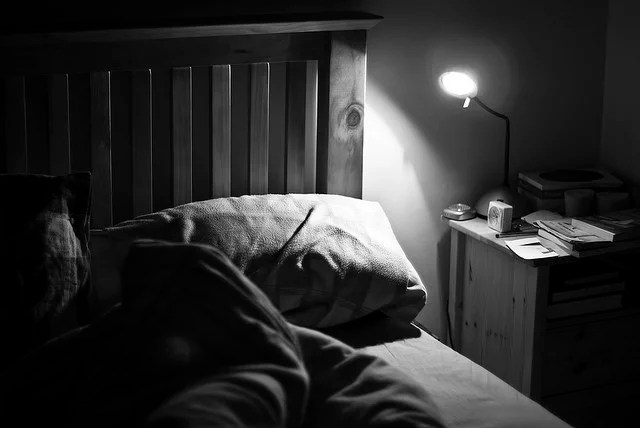
While you’re away the clock stalls the night;
I read, I squirm to warm my feet, I shift
pillows, unsnarl the sheet, curl, uncurl—
nothing’s right. What am I waiting for?
Were it a question not of days but weeks
I’d learn, I’m sure, to sprawl mid-bed, the way,
before we met, I did. I’d unlearn techniques
I learned to coexist; I’d sleep with me.
What am I waiting for? Towards four, I doze,
then wake with a start at five, the light still on,
Through the walls, first shudders underground
of trains for Russell Square or King’s Cross.
Soon time to silence the alarm. Day claims,
all duty. A neighbor’s dog complains.
The milkman clinks the fulls against the empties.
~~~~
Copyright 2024 Sandy Solomon
Sandy Solomon is the author of Pears, Lake, Sun published by the University of Pittsburgh Press. Her poems have been published in The New Yorker and The New Republic. She divides her time between Nashville, Tennessee and Suffolk, England.
Discover more from Vox Populi
Subscribe to get the latest posts sent to your email.

A beautiful love poem-song. Brava, Sandy!
LikeLiked by 1 person
And I just love that final image.
LikeLiked by 1 person
I do too.
>
LikeLiked by 1 person
I would call this shadowy yet amply lyrical nocturne a sonnet, despite the 15 lines. Perhaps its untimely surplus line implies that, as Robert Frost relayed in his own nocturne-sonnet, “One luminary clock against the sky // Proclaimed the time was neither wrong nor right.” I’d even say that this poem is a self-conscious sonnet composed by the author to establish distance (distance being the primary concern of this poem). The distance of someone wandering “away” literally as well as figuratively. Plus the narrative distance between readers and: the indistinct character “I”, the off-stage “you” , the suppositional other half of “me” that might replace “you.” And yet, how closely lurks a total de-coupling, because the unleashed conjectures of our midnight solitary selves run the risk of undoing (“uncurl”, “unlearn”, “un-derground”) the fragile bonds made viable in the light of day. Another possible name for the form of this poem: call it a fugue or a fugue sonnet? A fugue being a polyphonic piece of music or language in which one voice seems to flee from another voice.
LikeLiked by 1 person
Thank you, Therese. A fugue sonnet… I like it.
>
LikeLiked by 1 person
It’s definitely a London poem and makes me rememeber. Love the poem, it’s music, as y’all said. And, yes, temporary loneliness (“While you’re away”). And the milk bottles clanking used to be an early morning sound in London.
LikeLiked by 2 people
I wish we could edit – its music, of course and remember
LikeLiked by 1 person
So often my phone and I disagree on what I want to say🤣
LikeLike
I like the comfortable feel of the words that end each line, followed with the stark clink of the full milk bottles against the empties in the final line. A clinking reminder of the end or pause to shared bedtime. The rhythm of the telling grows in subtle ways with each time I read it.
I first read the daily Vox poem while still abed. 7 years since sharing this bed-land I still sleep on the same side. My body prefers it. I wonder what would happen if I met someone new for mutuality, but they also needed to sleep on the same side as me. Two full milkbottles clinking? I actually asked this of several friends….they responded that in their own long term situations, they have their separate bedrooms.
LikeLiked by 2 people
Beautifully said, Jim. Thank you.
LikeLiked by 1 person
I read the poems on my phone and loved the internal rhymes, then turned the phone sideways and still loved them. Though I saw the poem differently, the music still felt the same. I love musical poems, but felt the loneliness, also.
LikeLiked by 1 person
This poem evokes a powerful mood.
LikeLiked by 1 person
I second Michael — there are such lovely cadences in this poem.
LikeLiked by 3 people
I love the music of this poem. It feels reserved and formal, but also passionate in a restrained way. When I first read the poem, I thought it was a sonnet, but when I looked closely, I realized that it was instead a beautifully crafted 15 line poem in which sounds are echoed from one line to the next. Brava!
LikeLiked by 4 people