
Vox Populi
A curated webspace for Poetry, Politics, and Nature with over 6,000,000 visitors since 2014 and over 9,000 archived posts.
Dennis Wilson Wise: The woman who revolutionized the fantasy genre is finally getting her due

Think of your favorite fantasy or science fiction novel. You’ll know the author and title, of course. But can you think of its editor or publisher?
In publishing, the people who work behind the scenes rarely get their due. But on Oct. 1, 2024, at least, one industry pioneer got the limelight. On that day, PBS aired “Judy-Lynn del Rey: The Galaxy Gal,” the first episode of its new documentary series “Renegades,” which highlights little-known historical figures with disabilities.
A woman with dwarfism, Judy-Lynn del Rey was best known for founding Del Rey Books, a science fiction and fantasy imprint that turned fantasy in particular into a major publishing category.
As a scholar of fantasy literature, I had the good fortune to serve as research consultant for the PBS project. Due to time constraints, however, the episode could tell only half of del Rey’s story, passing over how she affected science fiction and fantasy themselves.
Judy-Lynn del Rey, you see, had very clear notions on what kind of stories people wanted to buy. For some critics, she also committed the unforgivable sin of being right.
The Mama of ‘Star Wars’
Over the course of her career, del Rey earned a reputation as a superstar editor among her authors. Arthur C. Clarke, who co-wrote the screenplay for “2001: A Space Odyssey,” called her the “most brilliant editor I ever encountered,” and Philip K. Dick said she was the “greatest editor since Maxwell Perkins,” the legendary editor of Ernest Hemingway and F. Scott Fitzgerald.
She got her start, though, working as an editorial assistant – in truth, a “gofer” – for the most lauded science fiction magazine of the 1960s, Galaxy. There she learned the basics of publishing and rose rapidly through the editorial ranks until Ballantine Books lured her away in 1973.
Soon thereafter, Ballantine was acquired by publishing giant Random House, which then named del Rey senior editor. Yet her first big move was a risky one – cutting ties with Ballantine author John Norman, whose highly popular “Gor” novels were widely panned for their misogyny.

~
Nonetheless, del Rey’s mission was to develop a strong backlist of science fiction novels that could hook new generations of younger readers, not to mention adults. One early success was her “Star Trek Log” series, a sequence of 10 novels based on episodes of “Star Trek: The Animated Series.”
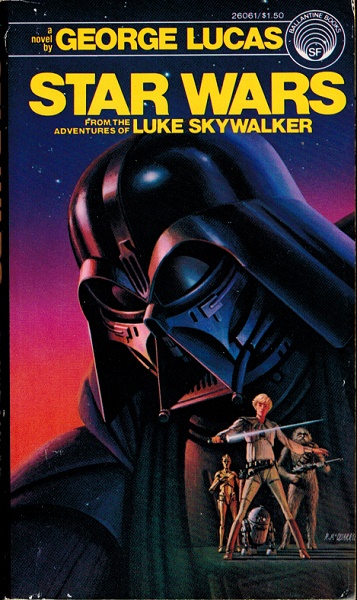
But del Rey landed an even bigger success by snagging the novelization rights to a science fiction film that, at the time, few Hollywood executives believed would do well: “Star Wars.”
This savvy gamble led to years of lucrative tie-in products for Ballantine such as calendars, art books, sketchbooks, the Star Wars Intergalactic Passport and, of course, more novels set in the Star Wars universe – so many different tie-ins, in fact, that del Rey dubbed herself the “Mama of Star Wars.”
Afterward, she became someone who, as reporter Jennifer Crighton put it, radiated “with the shameless glee of one of the Rebel forces, an upstart who won.”

A big player in big fiction
Del Rey’s tendencies as an editor were sometimes criticized – often by competitors who could not match her line’s success – for focusing too much on Ballantine’s bottom line. But she also chose to work within the publishing landscape as it actually existed in the 1970s, rather than the one she only wished existed.
In his book “Big Fiction,” publishing industry scholar Dan Sinykin calls this period the “Conglomerate Era,” a time when publishing houses – usually small and family run – were being consolidated into larger corporations.
One benefit of this shift, however, was greater corporate investment in the industry, which boosted print runs, marketing budgets, author advances and salaries for personnel.
Ballantine’s parent company, Random House, was also known as an industry leader in free speech, thanks to the efforts of legendary CEOs Bennett Cerf and Robert L. Bernstein.
Accordingly, Random House gave their publishing divisions, including Ballantine, immense creative autonomy.
And when del Rey was finally given her own imprint in 1977, she took her biggest risk of all: fantasy.
The Del Rey era
In prior decades, fantasy had a reputation for being unsellable – unless, of course, your name was J.R.R. Tolkien, or you wrote Conan-style barbarian fiction. Whereas the top science fiction magazines often had distinguished runs, fantasy magazines often folded due to lack of sales.

~
In 1975, though, del Rey hired her husband, Lester del Rey, to develop a fantasy line, and when Del Rey Books launched two years later, it landed major successes with bestsellers such as Terry Brooks’ “The Sword of Shannara” and Stephen R. Donaldson’s “The Chronicles of Thomas Covenant the Unbeliever.” Yet even though Lester edited the fantasy authors, Judy-Lynn oversaw the imprint and the marketing.
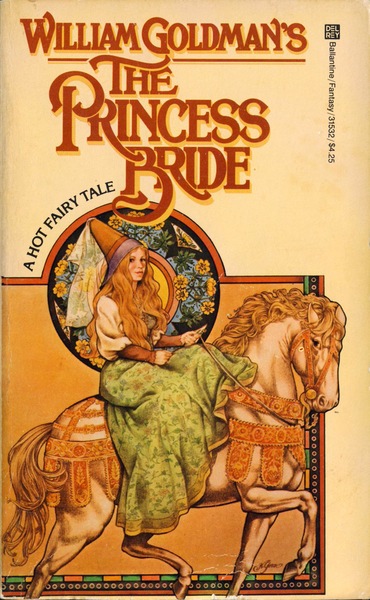
One lesser-known example of her prowess is “The Princess Bride.”
Today, most people know the 1987 film, but the movie originated as a much earlier novel by William Goldman. The original 1973 edition, however, sold poorly. It might have faded into obscurity had del Rey not been determined to revive Ballantine’s backlist.
She reissued “The Princess Bride” in 1977 with a dazzling, gate-folded die-cut cover and a new promotional campaign, without which the novel – and the film – might never have found its later success.
Accolades accumulate
Thanks to these efforts, Del Rey Books dominated genre publishing, producing more bestselling titles through 1990 than every other science fiction and fantasy publisher combined. Yet despite complaints that the imprint prioritized commercial success over literary merit, Del Rey authors earned their fair share of literary accolades.
The prestigious Locus Poll Award for best science fiction novel went to Del Rey authors Julian May and Isaac Asimov in 1982 and 1983. Other Locus awardees include Patricia A. McKillip, Robert A. Heinlein, Larry Niven, Marion Zimmer Bradley and Barbara Hambly.
Barry Hughart’s “Bridge of Birds” was one of two winners for the World Fantasy Award in 1985 and won the Mythopoeic Society Award in 1986. Even more impressively, Del Rey ran away with the Science Fiction Book Club Award during that prize’s first nine years of existence, winning seven of them. The imprint’s titles also won three consecutive August Derleth Fantasy Awards – now called the British Fantasy Award – from 1977 through 1979.
Yet despite these accolades, Del Rey’s reputation continued to suffer from its own commercial success. Notably, Judy-Lynn del Rey was never nominated for a Hugo Award for best professional editor while she was alive. When she died in 1986, del Rey was belatedly voted for a posthumous award, but her husband, Lester, refused to accept it, saying that it came too late.
Although the current narrative continues to be that Del Rey Books published mainly formulaic mass-market fiction in its science fiction and fantasy lines, the time may be ripe to celebrate the foresight and iconoclasm of a publisher who expanded speculative fiction beyond the borders of a small genre fandom.
First published in The Conversation. Included in Vox Populi with permission.
Dennis Wilson Wise is Professor of Practice in English Literature, University of Arizona.
Discover more from Vox Populi
Subscribe to get the latest posts sent to your email.

Yesterday I boxed up more science fiction paperbacks for the library bookstore. Some I had carefully covered years before when the thousands of books downstairs were still in some kind of reasonable order. I knew the name Del Rey that appeared so often on my books but never knew anything about her. Thank you for revealing her to me. I forgive you for making my task of clearing out more difficult. It is worth it to have a little more insight into why I even have those books. I wonder how much she and other editors I will never know have shaped my life.
LikeLiked by 1 person
I am hoping the library will value all the old science fiction magazines, also.
LikeLiked by 1 person
Modern fantasy was invented largely by Tolkien, but science fiction is an American invention, our gift to world literature. Writers like Asimov, Heinlein and Bradley have shaped our view of the world and the future. I’m glad, Barbara, you are taking a new look at old favorites.
LikeLiked by 1 person
Cut my teeth on Tunnel in the Sky and the other early Heinlein books. ( liked them better than his later, more misogynistic books-although maybe I just began to recognize it more ) Bradbury and Clarke remain my favorites although I read my share of Asimov and met many of my science fiction writing heroes at book signings.
LikeLike
My favorite writer of all time is Ursula K. Le Guin. She was incredibly versatile: fantasy, sci-fi, YA fiction, essays, film scripts, as well as truly stunning poetry. She is my model for the perfect person-of-letters.
>
LikeLiked by 1 person
I am thrilled to find out who made some of my favourite books happen – something one never really thinks about, at least I didn’t at the time.
LikeLiked by 2 people
The work of editors usually goes unnoticed, but behind every great writer is a great editor.
LikeLiked by 2 people
Thanks for this portrait of a pioneer and positive influencer who furthered the popularity and reach of the fantasy genre.
And thanks for its reminder of the Princess Bride film, where I found the best depiction of a perfect marriage: Wallace Shawn and Andre the Giant.
LikeLiked by 2 people