Vox Populi
A curated webspace for Poetry, Politics, and Nature with over 6,000,000 visitors since 2014 and over 9,000 archived posts.
Vanessa Chakour: My Innate Connection to Stolen Land
Red oak and red maple populate the living landscape of Mount Owen in the Northeastern U.S., along with birch, white pine, and beautiful old sugar maples. Native medicinals like common violet and rare blue cohosh flourish in the understory. Spicebush rims a vernal pool while goldenrod blooms around the forest edge. Otherworldly mushrooms like the reishi, oyster, and turkey tail mushrooms emerge amidst dramatic moss-covered ledges. I hear the beloved song of the wood thrush, catch glimpses of white-tailed deer, and find evidence of red foxes, bobcats, coyotes, and black bears.
Yet, in stark contrast to this thriving collection of lives, quiet, depleted areas of the forest and old logging trails tell a different, darker story. The wild beauty of this place used to expand to every horizon before it met a violent history of colonialism. I was raised in the woods of western Massachusetts, not far from here, but my feelings of innate connection to the environment were profoundly altered when I learned the history of this stolen land. My sense of belonging was replaced by questions about my place in the world as someone whose ancestral roots stretch to Scotland and the Middle East, among other lands shaped by colonization and dispossession.
When my partner and I purchased Mount Owen two years ago, the idea felt like a grotesque misnomer: a false claim of ownership over life impossible to possess, since plants, fungi, and more-than-human animals inherently belong to themselves. Trying to figure out the right word to describe the uncomfortable transfer of “ownership” we were negotiating, my partner and I landed on the word “stewardship.”
While the word expresses our intent to nurture the local ecosystem, it doesn’t acknowledge the land’s original guardians. Today, we hold a land title rooted in a legal system that views land as property, not as a living entity with inherent rights. It is a title linked to historical theft, genocide, and dispossession. Mount Owen rises 1,500 feet above the traditional homeland of the Nipmuc Tribal Nation, stewards of this land for more than 12,000 years. We are working hard to move forward locally and culturally to dismantle colonial land laws and embrace a more respectful understanding of the living Earth.
Àdhamh Ó Brion, a friend and colleague dedicated to helping to decolonize the Gaelic people of Scotland through reconnection with Indigenous culture and language, highlights the importance of direct communion with the land. Without an intimate relationship, he argues, authentic advocacy for the land’s well-being is impossible: “If you’re not on the land and part of the land, then who ultimately speaks for the land?”
On Mount Owen, we are moving slowly, learning from the land and its original stewards, and building community rooted in respect for Indigenous people and their knowledge. We are working toward a future where the land has been restored its rights and agency—as well as deep love.
Countering Settler Ecologies
How can we transition from exclusionary, extractive practices to a system that honors Traditional Ecological Knowledge and prioritizes the well-being of Earth? This is one of the questions I posed to Irus Braverman, author of Settling Nature: The Conservation Regime in Palestine-Israel. Her book explains how “dispossession of Palestinians in the hands of the Zionist settler state occurs, centrally, in the ecological realm.” She coined the term “settler ecologies” to describe the oppressive situation, arguing that the territorial reach of Israel’s nature protection advances the Zionist project of Jewish settlement and the corresponding dispossession of non-Jews from this place.
The environmental damage and confusing arguments surrounding “native” and “non-native” species add another layer of devastation. Non-native species are not inherently harmful; some like plantago major provide ecosystem services like improved soil quality, erosion control, habitat, and food sources for wildlife. Plus, a fixation on their potential negative impacts can overshadow other, perhaps greater threats facing native species, like habitat destruction and pollution. Braverman describes how these arguments, mirroring the human struggle for land and belonging, position various creatures—fallow deer, gazelles, wild asses, griffon vultures, pine trees, and cows—as Israeli “soldiers” against their Palestinian counterparts—goats, camels, olive trees, hybrid goldfinches, and akkoub.
The Aleppo pine has become a tool of erasure, obscuring the ruins of Palestinian villages beneath a green veneer. Braverman describes pine forests as being central to the earlier Zionist mission and “the imaginary of the European forest.” While the Aleppo pine is native to the Mediterranean region, widespread planting in areas where it was not historically present has led to ecological concerns. The trees’ aggressive growth and dominance in certain ecosystems has raised questions about whether it should be classified as an invasive species.
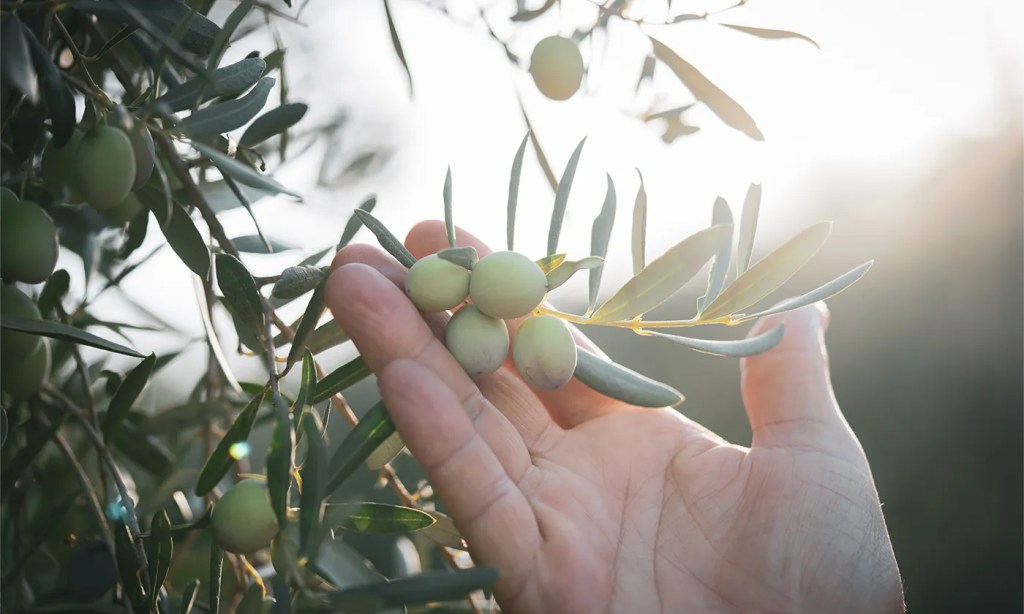
To complicate and confuse matters, olive trees are sometimes labeled “non-wild,” which in turn legitimizes ecological violence toward them, such as their uprooting from nature reserves, even with evidence that olive tree cultivation dates to the Chalcolithic period (3600–3300 BCE). Where exactly does the timeline for “wild” and for “native” begin? More than just crops in Palestine, olive trees are woven into the fabric of the culture. Yet hundreds of thousands of trees have been destroyed in recent decades to make way for Israeli settlements and for the separation wall, threatening livelihoods and the environment.
Throughout the world, this pitting of native and non-native organisms and species harms not only plants and other animals, but also displaced humans seeking refuge in new lands. In a 2021 article, Charles R. Warren, a professor of environmental management at the University of St. Andrews in Scotland, argues such labels are outdated and misleading and that they ignore the dynamic reality of ecosystems while promoting a view of nature as static and unchanging. The focus, as the article suggests, should be on how species interact within the environment, not their origin. He writes, “The native/alien paradigm purports to be about flora and fauna, but actually it is all about us—our perceptions and preferences about where other species belong and our ethical judgments about how to treat them.”
To Forage Is to Connect
Foraging is one of the many ways people have interacted with their environment for generations. Beyond a means of sustenance, foraging for specific herbs and ingredients represents a cultural connection to the land. Layla K. Feghali, author of The Land in Our Bones, emphasizes this point, stating that ancestral landscapes of the SWANA region in Southwest Asia and North Africa have “inspired every aspect of our relationships, rituals, beliefs, and identities.”
But throughout the world, fines and arrests for trespassing sever this vital connection. In the United States, the right to forage began to erode in the mid-19th century, leading to the dispossession of Indigenous peoples and those who lived close to the land. In 1977, Israel enacted laws that criminalized foraging on designated nature reserves. Criminalizing foraging divorces people from local flora, weakening ecosystems and unraveling cultural traditions. And of course, when people are prevented from foraging, they must often buy plants that the earth gives freely; leading to unnecessary economic burdens.
When people are distanced from land, they lose the intimate knowledge necessary to be effective stewards. So how can we navigate this? In spaces we inhabit, how can we protect plants, fungi, and other animals we don’t know or understand? How will we recognize their absence if we don’t notice their presence? “Recentering our relationship with the earth can begin to transform the traumatic wounding of colonial ruptures,” Layla K. Feghali writes.
On Mount Owen we’re exploring ways to develop a reciprocal stewardship framework that honors the land’s rights as well as those of humans, who are also part of the ecosystem. Effective stewards know, love, and understand their local ecosystems. That is why my partner and I are working to foster an emotional connection to the land so we don’t lose sight of whom and what we’re protecting.
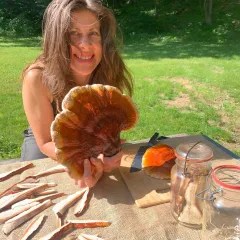
VANESSA CHAKOUR is an author, naturalist, and former pro-boxer who fosters intimacy with inner and outer wilds through writing, herbalism, martial arts, and land stewardship. With more than a decade of experience, she has facilitated courses and retreats in partnership with wildlife organizations like the Wolf Conservation Center and the Jaguar Rescue Center, and is a Project Coyote Ambassador. Vanessa is the author of Awakening Artemis (Penguin Life, 2021), a memoir told through the lens of 24 medicinal plants, and Earthly Bodies: Embracing Animal Nature (Penguin Life, 2024) that delves into the parallels between human struggles and the experiences of our wild neighbors, offering insights on self-discovery and coexistence. She lives in Massachusetts where she coaches boxing, stewards her local ecosystem, and is a devoted student of nature. |
First published in YES! Magazine. Included in Vox Populi with permission.
Discover more from Vox Populi
Subscribe to get the latest posts sent to your email.

What an important and yet sad article.
LikeLiked by 2 people
yes it is.
LikeLiked by 2 people
We’ve tried to do something similar here in Peru. In the rainforest we bought 170 hectares and try to protect it from being destroyed. A drop in an immense ocean. The land mafia has moved in, felling trees, building shacks, burning brushland as a manifestation of their power, ‘selling’ pieces of our land illegally.
LikeLiked by 3 people
Thanks, Rosemary. Yes, the abuse of the land by legal and extra-legal means is a world wide problem.
>
LikeLiked by 2 people