
Vox Populi
A curated webspace for Poetry, Politics, and Nature with over 6,000,000 visitors since 2014 and over 9,000 archived posts.
Patrick Henry: How Dorothy Day found her calling while fighting the 1918 flu pandemic
Dorothy Day’s nine months as a nurse at the height of a pandemic that killed 50 million people, deepened her commitment to the poor, homeless and abandoned.
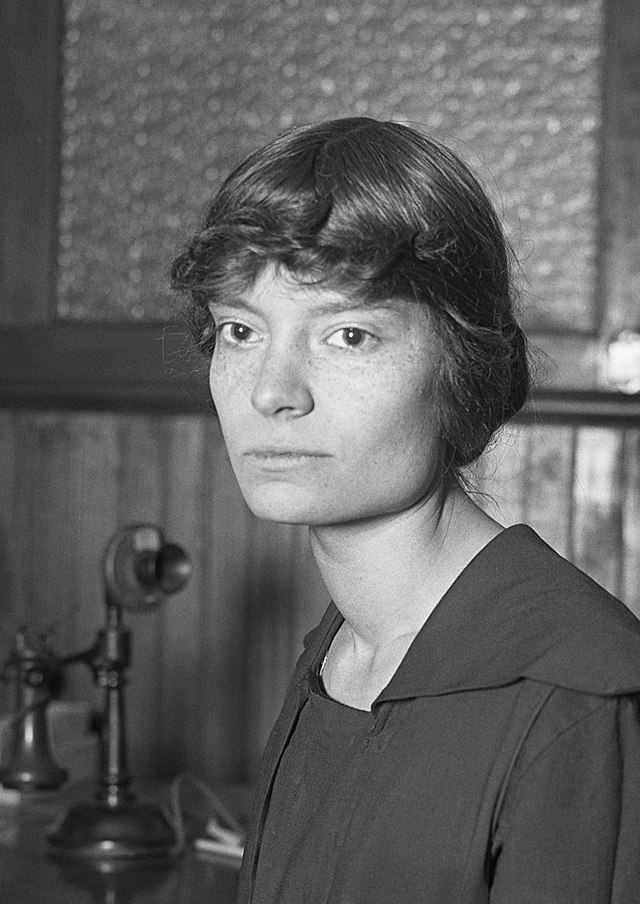
.
In 1917, having dropped out of college and moved to New York with her family, Dorothy Day took her first New York job, with a daily Socialist news paper, The Call, and settled into her own one-room apartment on Cherry Street. She was 19 years old and quickly overcome by the poverty she encountered and the smell of that poverty inside the tenements she frequented. At this point, she mentions, for the first time, in her major autobiography, “The Long Loneliness,” that she could feel “the spell of the long loneliness descend” on her.
Working 12-hours a day in a politically charged atmosphere, Dorothy’s assignments for The Call took her all over the city to picket lines, labor strikes, peace rallies, socialist and anarchist gatherings. At this point, she considered herself “neither a Christian, nor a pacifist” and later came to believe that, despite her pretensions, she was “not a good radical” either. In April of the same year, she was assigned to go to Washington, D.C. with a group of Columbia University students to protest the passage of the Conscription Act. After her return to New York City, she left The Call and began working for The Masses. Shortly after The Masses was suppressed (because it opposed entry into World War I), Dorothy once again went to Washington, D.C., this time to picket the White House with the suffragists. Those who were arrested refused bail and were put into the House of Detention for the night. Once the new prisoners received their sentences and were transferred to jail, they began a hunger strike to protest the treatment of political prisoners. After 10 days, all their demands were met. But jail was a shock to Dorothy: She was pushed, kicked, dragged, beaten, completely dehumanized. It was a “wound” inflicted upon her that left her with a profound sense of social injustice. During these humiliations, she took comfort in reading the Psalms.
Back in New York, she began a literary lifestyle spending time around the Provincetown Playhouse and befriending writers like Eugene O’Neill and Michael Gold. “Suddenly,” however, she notes that a succession of events and “the tragic aspect of life” began to overwhelm her. “What good am I doing my fellow men?” she had written to a friend. “They are sick and there are not enough nurses to care for them.” Dorothy didn’t want to help the war effort, but with so many nurses now overseas, she felt she had to do something. “Nursing the sick was not contrary to my beliefs,” she writes in “From Union Square to Rome.” By January 1, 1918, she and her sister, Della, had signed up to become nurses at Kings County Hospital in Brooklyn.
Dorothy notes that she “worked at the hospital for a year, or until after the influenza epidemic was over.” Her nurse’s training began in April, and she left the hospital in December. She spent nine months working there during the heart of the pandemic, which persisted until 1920. That pandemic may have killed as many as 50 million people worldwide out of the 500 million or one-third of the world’s population that had become infected. It killed 675,000 people in the United States — and of the 30,000 New York City dwellers that succumbed to it, 21,000 died between mid-September and mid-November 1918, while Dorothy was working at Kings County Hospital.
Initially, Dorothy worked on the “fracture ward,” which was populated with old people in physical and psychic pain who took their frustrations out on the nurses: thro ing things, hurling insults, spitting on the nurses when they tried to bathe them, even tossing their bedpans at them. “Working on this ward was the hardest part of my hospital career,” writes Dorothy. The 12-hour days, 7 a.m. to 7 p.m., were brutal. It was hard labor with little respite. Many would-be nurses soon dropped out but Dorothy and Della remained in the program. Dorothy was nonetheless pushed to her limits: “This ward broke me; the work was so hard.” She came to realize how undisciplined her former life had been and to appreciate the order and discipline of her new life on the wards: “What discipline I submitted to because I loved the work.”
When Dorothy moved to the medical wards, she met the influenza epidemic head-on during its most potent phase. The work was unending: change each bed, bathe all patients and rub them down with alcohol every day. At times, a single nurse was responsible for as many as 50 patients. The nurses learned to disregard fatigue but “[they] fell unconscious into [their] beds at night and had to drag [themselves] out of sleep in the morning.” The patients were poor and uncomplaining. They expected little and “accepted their suffering with stoicism.” “It was heartbreaking,” Dorothy admits, “to see young people all around us die of the flu.” Yet, “we did not have time to suffer over the human misery we saw… Often we had to prepare for the morgue as many as eight corpses a day.”
In both accounts that she gives of her experience as a nurse, in 1938 in “From Union Square to Rome” and in 1952 in “The Long Loneliness,” Dorothy stresses the importance of a certain Miss Adams with whom she worked closely, a particularly compassionate and understanding nurse in training, who brought joy to her work and was especially respectful to patients. Miss Adams was a practicing Catholic, close to 30 years of age, who never spoke about her faith. Dorothy immediately saw “the healthiness of her soul” and began going to mass with her on Sundays. On one of those Sundays, as she knelt in the chapel, Dorothy asked: “‘What is man, that Thou art mindful of him, O Lord?‘ What are we here for, what are we doing, what was the meaning of our lives?”
In January 1919, Dorothy informed the hospital that she would be leaving the nurses training program. The war had ended two months earlier, the influenza epidemic had begun to recede, hundreds of nurses would soon be returning from abroad and, more than anything, she wanted to write.
“After all,” she writes in “From Union Square to Rome,” “I felt that nursing was not my vocation and that my real work was writing and propaganda.”
She adds later in “The Long Loneliness,” while noting the scorn of the superintendent when informed of her leaving: “I had been a good and sympathetic nurse. I knew that I loved the work, and that if I had not had the irresistible urge to write, I would have clung to the profession of nursing as the most noble work women could aspire to.”
Situated about a third of the way into “The Long Loneliness,” Dorothy’s sudden, courageous, and somewhat surprising one-year nursing career slows down her readers and sends them back to the first pages of her autobiography, where she describes what happened after the 1906 San Francisco earthquake that killed roughly 3,000 people. Dorothy was eight years old living in Oakland when, during the early morning of April 18, the quake hit and lasted “two minutes and twenty seconds.” Like World War I and the 1918 Influenza Epidemic, it was “an event which threw us out of our complacent happiness into a world of catastrophe.” The whole experience remains “confused in [her] mind” and linked with her mother’s sudden illness, “both part of the world’s tragedy to me.” What she nonetheless recalls vividly is “the joy of doing good, of sharing whatever we had with others after the earthquake… All the neighbors joined my mother in serving the homeless. Every stitch of available clothing was given away. Only then, did people really live, really love their brothers. In such love was the abundant life and I did not have the slightest idea how to find it.”
When I finished reading “The Long Loneliness” for the first time and understood the scope and length of Dorothy’s deep commitment to the poor, the homeless, and the abandoned, I drifted back to the pages where she describes her days at Kings County Hospital and in particular to her conversation with the assistant superintendent of nurses who spoke of the nobility and dignity of the nursing profession and of “’the sacrament of duty.” It was clear that “the sacrament of duty” incarnated the nature of Dorothy’s commitment. I was amazed at how the ending of the autobiography had retrospectively illuminated the path that led to it.
This story was produced by Fellowship Magazine and first published in the June/July 2020 issue of The Catholic Worker.
Patrick Henry is Cushing Eells Emeritus Professor of Philosophy and Literature at Whitman College. He is the author of “We Only Know Men: The Rescue of Jews in France during the Holocaust” and the editor of “Jewish Resistance Against the Nazis.”
Discover more from Vox Populi
Subscribe to get the latest posts sent to your email.

“’the sacrament of duty.”
I don’t have words. What a blessing to find such goodness in one person. Dororthy Day proved it with her life, that one can stand for goodness for a large part of one’s life. But what was also amazing in the life of Dororthy Day was her decision to live out the method of goodness, as if it never existed, and she would courageously bring it forth for the first time as a method to solve the problems of human existence in our world. By doing so, Dorothy had goodness breath and move about in her part of the world. Therefore, she allowed the way of goodness to become one of the working methods to assist in solving the problems of human survival. Through Dororthy Days actions, she was able to bring into existence a reality which goodness created, so that this creation would automatically be included in the equation of established realities, with which authorities would need to contend.
When one reads about all that Dorothy Day accomplished, it also becomes amazing that her decision to apply goodness in her work was once just a thought in Dorothy’s mind, or a simple proposition; but however, when she acted on these thoughts, it came to pass that during the time when Dororthy Day lived, goodness existed in the world. It seemed that Dororthy Day believed in the mission which goodness had for the world, such as revealing truths and establishing balance for the human condition, almost in the same way as a scientist believes in applying the scientific method to discover truths that would solve one of the many problems of our human existence.
LikeLike
fascinating & passionate. yes.
LikeLike
Fascinating and humbling. One of those exceptional lives. We don’t have to go to those length – because it’s not in us – but let us take the hint of kindness and care for those who struggle in this world instead of beating them down even further.
LikeLike
D.D. is one of my heroes. An ordinary person who rose to the challenge. All of us should have her courage and determination.
LikeLike
What a fascinating & passionate woman! Thanks for this, Mike!
LikeLike