
Vox Populi
A curated webspace for Poetry, Politics, and Nature with over 6,000,000 visitors since 2014 and over 9,000 archived posts.
Edna St. Vincent Millay: The Ballad of the Harp-Weaver
“Son,” said my mother,
When I was knee-high,
“You’ve need of clothes to cover you,
And not a rag have I.
“There’s nothing in the house
To make a boy breeches,
Nor shears to cut a cloth with
Nor thread to take stitches.
“There’s nothing in the house
But a loaf-end of rye,
And a harp with a woman’s head
Nobody will buy,”
And she began to cry.
That was in the early fall.
When came the late fall,
“Son,” she said, “the sight of you
Makes your mother’s blood crawl,—
“Little skinny shoulder-blades
Sticking through your clothes!
And where you’ll get a jacket from
God above knows.
“It’s lucky for me, lad,
Your daddy’s in the ground,
And can’t see the way I let
His son go around!”
And she made a queer sound.
That was in the late fall.
When the winter came,
I’d not a pair of breeches
Nor a shirt to my name.
I couldn’t go to school,
Or out of doors to play.
And all the other little boys
Passed our way.
“Son,” said my mother,
“Come, climb into my lap,
And I’ll chafe your little bones
While you take a nap.”
And, oh, but we were silly
For half an hour or more,
Me with my long legs
Dragging on the floor,
A-rock-rock-rocking
To a mother-goose rhyme!
Oh, but we were happy
For half an hour’s time!
But there was I, a great boy,
And what would folks say
To hear my mother singing me
To sleep all day,
In such a daft way?
Men say the winter
Was bad that year;
Fuel was scarce,
And food was dear.
A wind with a wolf’s head
Howled about our door,
And we burned up the chairs
And sat on the floor.
All that was left us
Was a chair we couldn’t break,
And the harp with a woman’s head
Nobody would take,
For song or pity’s sake.
The night before Christmas
I cried with the cold,
I cried myself to sleep
Like a two-year-old.
And in the deep night
I felt my mother rise,
And stare down upon me
With love in her eyes.
I saw my mother sitting
On the one good chair,
A light falling on her
From I couldn’t tell where,
Looking nineteen,
And not a day older,
And the harp with a woman’s head
Leaned against her shoulder.
Her thin fingers, moving
In the thin, tall strings,
Were weav-weav-weaving
Wonderful things.
Many bright threads,
From where I couldn’t see,
Were running through the harp-strings
Rapidly,
And gold threads whistling
Through my mother’s hand.
I saw the web grow,
And the pattern expand.
She wove a child’s jacket,
And when it was done
She laid it on the floor
And wove another one.
She wove a red cloak
So regal to see,
“She’s made it for a king’s son,”
I said, “and not for me.”
But I knew it was for me.
She wove a pair of breeches
Quicker than that!
She wove a pair of boots
And a little cocked hat.
She wove a pair of mittens,
She wove a little blouse,
She wove all night
In the still, cold house.
She sang as she worked,
And the harp-strings spoke;
Her voice never faltered,
And the thread never broke.
And when I awoke,—
There sat my mother
With the harp against her shoulder
Looking nineteen
And not a day older,
A smile about her lips,
And a light about her head,
And her hands in the harp-strings
Frozen dead.
And piled up beside her
And toppling to the skies,
Were the clothes of a king’s son,
Just my size.
Public Domain. First published by Flying Cloud Press, 1922.
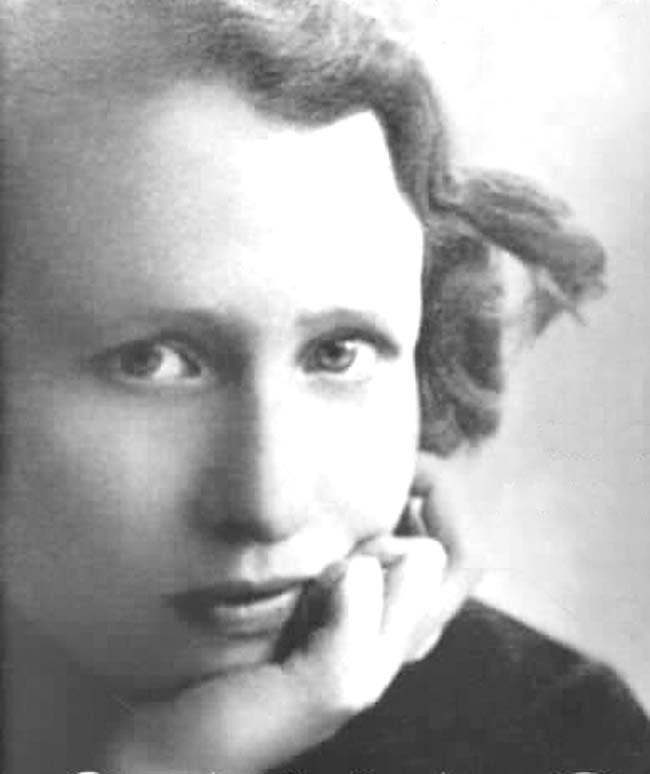
Edna St. Vincent Millay (1892 – 1950) was an American lyrical poet and playwright. Millay was a renowned social figure and noted feminist in New York City during the Roaring Twenties and beyond. Millay won the 1923 Pulitzer Prize for Poetry for her poem “Ballad of the Harp-Weaver”; she was the first woman and second person to win the award. In 1943, Millay was the sixth person and the second woman to be awarded the Frost Medal for her lifetime contribution to American poetry. Millay was highly regarded during much of her lifetime, with the prominent literary critic Edmund Wilson calling her “one of the only poets writing in English in our time who have attained to anything like the stature of great literary figures.” By the 1930s, her critical reputation began to decline, as modernist critics dismissed her work for its use of traditional poetic forms and subject matter, in contrast to modernism’s exhortation to “make it new.” However, the rise of feminist literary criticism in the 1960s and 1970s revived an interest in Millay’s works. (source: Wikipedia)
Discover more from Vox Populi
Subscribe to get the latest posts sent to your email.

Wonderful!
LikeLiked by 1 person
Oh I love this. Reminds me of all the strange sad “children’s” stories I heard as a child. Remember the little match girl?
LikeLiked by 1 person
Oh, yes, I loved the children’s stories.
>
LikeLiked by 1 person
I always loved Edna St. Vincent Millay
LikeLiked by 2 people
Thanks, Rosemary. I discovered her work late. When I was young, I was enamored of modernist poems, then confessional poems, while the elegant music and wit of Vincent’s poetry eluded me. Now, she’s one of my favorites. Perhaps I had to grow into her poems.
>
LikeLiked by 1 person
Her sonnets are my favorite. I love, LOVE reading them aloud…
LikeLike
Ah I didn’t know this one, Michael — what a strange persona poem, what a tale…Now I’m sure that when I’ll see a harp player, I’ll remember this poem!
LikeLiked by 2 people