
Vox Populi
A curated webspace for Poetry, Politics, and Nature with over 6,000,000 visitors since 2014 and over 9,000 archived posts.
David Kirby: Golden Gate by Clarence Major (Review)
Golden Gate and Other Stories
By Clarence Major
Ravenna Press, 236 pages, $16.00

.
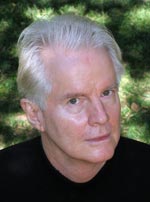
If Clarence Major were writing a story about what I’m doing at this very moment, he would begin by saying, “Hi, my name is David Kirby. I’m a poet and that is probably the most important thing about me. I’m ordinary-looking with thinning hair and hazel eyes. People passing me on the street don’t look twice. I blend in nicely. I live in Tallahassee, Florida. Our cat Patsy is sleeping next to me on my desk. I write book reviews as well, and today I’m reviewing a book of short stories by Clarence Major. It’s nice outside, sunny and cool, and I might talk a walk later.”
That’s my version of some lines in a story called “Joe’s Parties,” the narrator of which breaks the fourth wall (“Hi, I’m Reed Bicknell,” he says) and tells us all about himself. But it’s a fair representation of Major’s style, particularly in more than one of these stories (“I’m Cameron James,” a narrator says in another, and “my name is John David Weems” in a third) and generally in all of them: characters introduce themselves or are introduced to us, details drift in like leaves through an open window, a scene is set, something happens – not much, usually—and we’re off to the next story. Not for Major the ornate prose of a DeLillo or Pynchon or David Foster Wallace; instead, one thinks of the brick-on-brick style of older writers like Dreiser, Sherwood Anderson, Richard Wright.
The primary effect of writing this way is to give these stories an air of discovery. The first and longest story here refers to actor Joseph Cotton’s 1989 operation for throat cancer and the Tiananmen Square massacre of 1990, and the others seem to be set roughly within that period and thereafter. (There’s also a phone booth in one story – remember those?) A new world is rising, and for the most part these stories read like field reports about earthlings to an alien race. As I made my way through them, I couldn’t help thinking of poet Brendan Constantine’s description of his process: “I get a lot of inspiration from just going out and pretending I’ve never been to this planet before. It’s a great way to remember just how absurd, strange, beautiful, and unlikely everything is around you. If I can stay in that childish frame of mind, in that place of possibility where you watch somebody get into an elevator, the doors close, then open again and five people come out, and it occurs to you, ‘That’s where you go to become five people!’”
Everything in the world of Golden Gate comes across as though it’s just appeared on the scene: when characters watch Entertainment Tonight, we are told it’s “a show about Hollywood celebrities.” Someone orders at a counter in a café, and when he is given a customer number, he says, “I placed our customer number on the table,” as though we might not know otherwise what one does with such a novelty. Even more revelatory are the mentions of “the well-known social media platform called Facebook” and “the new thing called texting” as well as – shocking! – “an online dating site,” something a newly single mom describes to her young-teen children as “a new way people are meeting.”
The action of these stories, such as it is, consists mainly of mid-level white collar types working on life’s little problems, like whether to say yes or no when somebody asks you out or where to go for dinner. In “A Walk in the Woods,” when the aforementioned Cameron James has a first-person story ripped to shreds by members of his writing workshop, he declares calmly that he’ll rework the piece from a third-person perspective and then goes for that walk, where he sees various birds and bugs and concludes that “all was well in nature.” The main character in “The Other Direction” is a musician trying to persuade a bandmate to go to bed with her; he doesn’t want to, and they don’t. The most representative of these low-key endings can be found in a third example, “Pharmaceuticals,” where two buddies are at a restaurant bemoaning their failed love lives when the server shows up with their food, at which point, “with nothing more to say, they began to eat.” Not much in Golden Gate is made of the Golden Gate Bridge except in the first story, where one character pushes another off of it; otherwise, the bridge is just there, like any other prop in the scenarios acted out by these unremarkable characters.
Some of the individual pieces here are barely stories, in fact. Will I remember them a year from now as I do Joyce’s “The Dead” or Shirley Jackson’s “The Lottery” or “Cat People,” Kristen Roupenian’s 2017 New Yorker story about a young woman’s sexual entanglement with an older man that became a sensation on the well-known social media platform called Facebook and elsewhere? It seems unlikely.
Yet Major’s stories are oddly soothing in a way these others aren’t. Take the book’s last story, “Coming Home,” in which an aspiring musician named Andy Johnson gets fired from his dishwashing job. He collects his pay and steps into the street.
The cold air felt good on his face. He thought of his father. He could hear his father’s piano on the wind. It was a sweet sound. He thought of his father’s struggles to make it as a musician. In many ways Michael Johnson had succeeded. “Daddy never gave up,” Andy whispered to the wind. This thought gave him more confidence than he’d felt in a long while. He walked faster toward the bus stop. He whispered to himself, “I’m going home and play the piano.”
This is why I can see myself coming back to the stories in Golden Gate again on a day like this one, say, when not much is going on. It’s almost as though we see each letter, word, and sentence in Clarence Major’s prose appear on the page as he types it, and because of that, we experience his characters’ lives in something like real time, where the past is no big deal and the future hasn’t been written yet, meaning anything can happen. In almost every case, it’s as though something better might be just around the corner—on the other end of that shiny bridge, maybe.
Copyright 2023 David Kirby
David Kirby is the Robert O. Lawton Distinguished Professor of English at Florida State University. He has received many honors for his work, including fellowships from the Guggenheim Foundation and the National Endowment for the Arts, and his work appears frequently in the Best American Poetry and Pushcart Prize volumes. Kirby is the author of numerous books, including The House on Boulevard St.: New and Selected Poems, which was a finalist for the 2007 National Book Award in poetry.
Discover more from Vox Populi
Subscribe to get the latest posts sent to your email.

An excellent review!
LikeLike
Yes it is!
>
LikeLike