
Vox Populi
A curated webspace for Poetry, Politics, and Nature with over 6,000,000 visitors since 2014 and over 9,000 archived posts.
Claude McKay: The Lynching
His spirit in smoke ascended to high heaven.
His father, by the cruelest way of pain,
Had bidden him to his bosom once again;
The awful sin remained still unforgiven.
All night a bright and solitary star
(Perchance the one that ever guided him,
Yet gave him up at last to Fate’s wild whim)
Hung pitifully o’er the swinging char.
Day dawned, and soon the mixed crowds came to view
The ghastly body swaying in the sun:
The women thronged to look, but never a one
Showed sorrow in her eyes of steely blue;
And little lads, lynchers that were to be,
Danced round the dreadful thing in fiendish glee.
Public Domain
Source: Harlem Shadows (Harcourt Brace and Company, 1922)
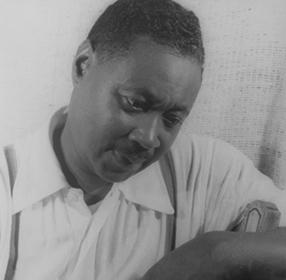
Festus Claudius “Claude” McKay (1889 – 1948) was a Jamaican journalist, fiction writer and poet, who was a seminal figure in the Harlem Renaissance. He wrote four novels: Home to Harlem (1928), a best-seller that won the Harmon Gold Award for Literature, Banjo (1929), Banana Bottom (1933), and in 1941 a manuscript called Amiable With Big Teeth: A Novel of the Love Affair Between the Communists and the Poor Black Sheep of Harlem which remained unpublished until 2017. McKay also authored collections of poetry, a collection of short stories, Gingertown (1932), two autobiographical books, A Long Way from Home (1937) and My Green Hills of Jamaica (published posthumously), and a non-fiction, socio-historical treatise entitled Harlem: Negro Metropolis (1940). His 1922 poetry collection, Harlem Shadows, was among the first books published during the Harlem Renaissance. His Selected Poems was published posthumously, in 1953. [Bio adapted from Wikipedia]
Discover more from Vox Populi
Subscribe to get the latest posts sent to your email.

What a grievous history we have. And what a poem😭
LikeLike
Yes. On both counts. Thanks, Lisa.
>
LikeLike
The “little lads”
LikeLike
A strangely beautiful sadness of this poem.
>
LikeLiked by 1 person
Wow what a poem!
Thank you for bringing this forth from its relative obscurity. We’re a creature, I’m coming to believe, useful or otherwise—solely unto ourselves.
What a fine world we’d have without us!
And yet this lovely man’s poem.
LikeLiked by 1 person
Thanks, Sean. I love this poem for it’s formal restraint, such an elegant sonnet about such an ugly subject.
>
LikeLike
I second Sean’s opinion!
LikeLike