
Vox Populi
A curated webspace for Poetry, Politics, and Nature with over 6,000,000 visitors since 2014 and over 9,000 archived posts.
César Vallejo: Black Stone on a White Stone
I will die in Paris on a rainy day,
a day I can already remember.
I will die in Paris – and I won’t turn away –
perhaps on a Thursday, like today, in autumn.
Thursday it will be, because today, Thursday,
as this poem arrives in prose, I put my arm bones on
wrong, and never so much as today
have I traveled my road to find myself alone.
César Vallejo is dead, they beat him
although he does nothing to them;
they beat him hard with a club and hard
also with a rope. The witnesses are
the Thursdays and the bones,
the solitude, the rain, the roads…
—
Translated by John Samuel Tieman and Michael Simms
—
PIEDRA NEGRA SOBRE UNA PIEDRA BLANCA
Me moriré en París con aguacero,
un día del cual tengo ya el recuerdo.
Me moriré en París —y no me corro—
tal vez un jueves, como es hoy, de otoño.
Jueves será, porque hoy, jueves, que proso
estos versos, los húmeros me he puesto
a la mala y, jamás como hoy, me he vuelto,
con todo mi camino, a verme solo.
César Vallejo ha muerto, le pegaban
todos sin que él les haga nada;
le daban duro con un palo y duro
también con una soga; son testigos
los días jueves y los huesos húmeros,
la soledad, la lluvia, los caminos…
—–
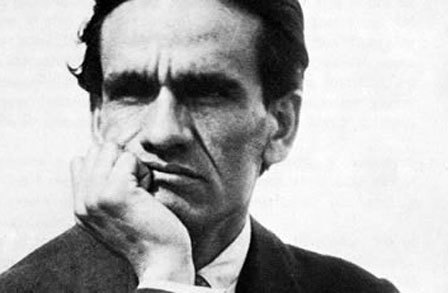
César Abraham Vallejo Mendoza (1892 – 1938) was a Peruvian poet, writer, playwright, and journalist. An outspoken political activist, Vallejo fled to Europe in 1923 after being jailed and persecuted in Peru. He died in Paris on April 15, 1938 — a rainy day, but a Friday, not a Thursday as he predicted in his famous poem. Although Vallejo published only three books of poetry during his lifetime, he’s considered one of the great poetic innovators of the 20th century in any language. He was always a step ahead of literary currents, and each of his books was distinct from the others, and, in its own way, revolutionary. He often invented words or twisted syntax to create new meanings (note, for example, the phrase que proso estos versos in the poem above) which makes him particularly challenging to translate. Thomas Merton called him “the greatest universal poet since Dante”.
Translation and compilation copyright 2019 John Samuel Tieman and Michael Simms
Discover more from Vox Populi
Subscribe to get the latest posts sent to your email.
