
Vox Populi
A curated webspace for Poetry, Politics, and Nature with over 6,000,000 visitors since 2014 and over 9,000 archived posts.
Richard Wright: Haiku
I am nobody:
A red sinking autumn sun
Took my name away.
***
A falling petal
Strikes one floating on a pond
And they both sink.
***
In a misty rain
A butterfly is riding
The tail of a cow.
***
A nude fat woman
Stands over a kitchen stove,
Tasting applesauce.
***
Their watching faces,
as I walk the autumn road
make me a traveler.
***
In a dank basement
A rotting sack of barley
Swells with sprouting grain.
***
In a drizzling rain,
In a flower shop’s doorway,
A girl sells herself.
***
From the cherry tree
To the roof of the red barn,
A cloud of sparrows flew.
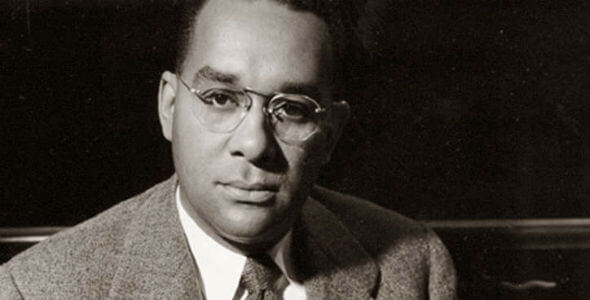
Richard Wright (1908 – 1960) was an American author of novels, short stories, poems, and non-fiction. Much of his writing concerns racial themes, especially related to the plight of African Americans during the late 19th to mid-20th centuries. Literary critics believe his work, especially his novel Native Son and his autobiography Black Boy, helped change race relations in the United States in the mid-20th century. As historian Henry Louis Gates Jr. has said: “If one had to identify the single most influential shaping force in modern Black literary history, one would probably have to point to Wright and the publication of Native Son.”
In the last eighteen months of his life, spent in self-imposed exile in France, Wright began to write poetry. In poor health and spirits, he found emotional healing and grounding in the practice of observing the world and writing haiku. First in his beloved country house in Ailly and then in Paris, he wrote more than 4,000 haiku before his death in 1960. Then, in the last months of his life, he selected 817 for publication.
More than fifty years after his death, the haiku he selected were finally published: Haiku: Other Worlds (the subtitle Wright intended, published in 2011); Haiku: The Last Poetry of Richard Wright (2011), and Haiku: The Last Poems of an American Icon (2012), all by Richard and Julia Wright, his daughter.
In her introduction to the most recent collection, Julia Wright describes how the practice of writing haiku reconnected her father to the natural world and to the death of his mother. She says that decades earlier in his thirties he “had written . . . how much he disliked the countryside because it reminded him of the physical hunger” he had known as a poor African American child in the fertile American South. Writing haiku not only allowed him to find discipline and distraction from “the volcanic experience of mourning” but also helped him accept “the difficult beauty of the earth in which his mother would be laid to rest.”
—
For an assessment of Richard Wright’s use of the haiku form and his place in the tradition, see Robert Hass’ short article Five Haikus by Richard Wright published in the Washington Post.
Poems selected from Haiku: The Last Poems of an American Icon by Richard Wright and Julia Wright. Published by Arcade, 2012. Included in Vox Populi for non-commercial educational use only.
Poems copyright 2012 Julia Wright. Prose and compilation copyright 2019 Michael Simms.
Discover more from Vox Populi
Subscribe to get the latest posts sent to your email.

Ugh. I love Richard Wright.
LikeLike