
Vox Populi
A curated webspace for Poetry, Politics, and Nature with over 6,000,000 visitors since 2014 and over 9,000 archived posts.
Louise Bogan: Words for Departure
Nothing was remembered, nothing forgotten.
When we awoke, wagons were passing on the warm summer pavements,
The window-sills were wet from rain in the night,
Birds scattered and settled over chimneypots
As among grotesque trees.
Nothing was accepted, nothing looked beyond.
Slight-voiced bells separated hour from hour,
The afternoon sifted coolness
And people drew together in streets becoming deserted.
There was a moon, and light in a shop-front,
And dusk falling like precipitous water.
Hand clasped hand
Forehead still bowed to forehead–
Nothing was lost, nothing possessed
There was no gift nor denial.
2
I have remembered you.
You were not the town visited once,
Nor the road falling behind running feet.
You were as awkward as flesh
And lighter than frost or ashes.
You were the rind,
And the white-juiced apple,
The song, and the words waiting for music.
3
You have learned the beginning;
Go from mine to the other.
Be together; eat, dance, despair,
Sleep, be threatened, endure.
You will know the way of that.
But at the end, be insolent;
Be absurd–strike the thing short off;
Be mad–only do not let talk
Wear the bloom from silence.
And go away without fire or lantern
Let there be some uncertainty about your departure.
From Body of this Death: Poems (1923)
Louise Bogan (1897 – 1970) was appointed the fourth Poet Laureate to the Library of Congress in 1945. As poetry editor of The New Yorker magazine for nearly 40 years, Bogan played a major role in shaping mainstream poetic sensibilities of the mid-20th Century. The Poetry Foundation notes that Bogan has been called by some critics the most accomplished woman poet of the twentieth century. It further notes that, “Some critics have placed her in a category of brilliant minor poets described as the “reactionary generation.” This group eschewed the prevailing Modernist forms that would come to dominate the literary landscape of the era in favor of more traditional techniques. Dictionary of Literary Biography contributor Brett C. Millier named Bogan “one of the finest lyric poets America has produced,” and added that “the fact that she was a woman and that she defended formal, lyric poetry in an age of expansive experimentation made evaluation of her work, until quite recently, somewhat condescending.”
.
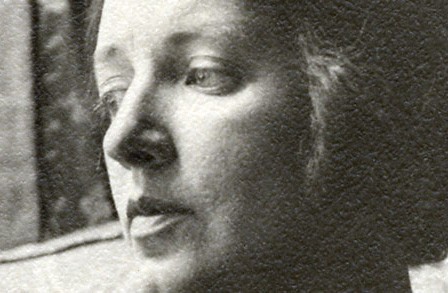
Louise Bogan [Source: Poetry Foundation]
Discover more from Vox Populi
Subscribe to get the latest posts sent to your email.
