
Vox Populi
A curated webspace for Poetry, Politics, and Nature with over 6,000,000 visitors since 2014 and over 9,000 archived posts.
Chuck Taylor: The Song Dog
.
Note Posted on Back Door for Coyote
Sorry, I didn’t know you still yodeled your yips
around these hills. How stupid of me to assume
that just because a greedy developer covered
your range with copycat homes pinched in
close together, that you’d disappear, when the
Blanco and her bottomland are blocks away
and plenty of hills remain covered with cedar
and post oak. You own this land and we are
mere interloping immigrants. Do what you need
to do but don’t expect us to clear off soon these
limestone cliffs. Slip through the holes in all
these inane backyard fences that separate us.
Sing all you want as you range on through
every four AM. I plan to keep my cat inside.
—
.
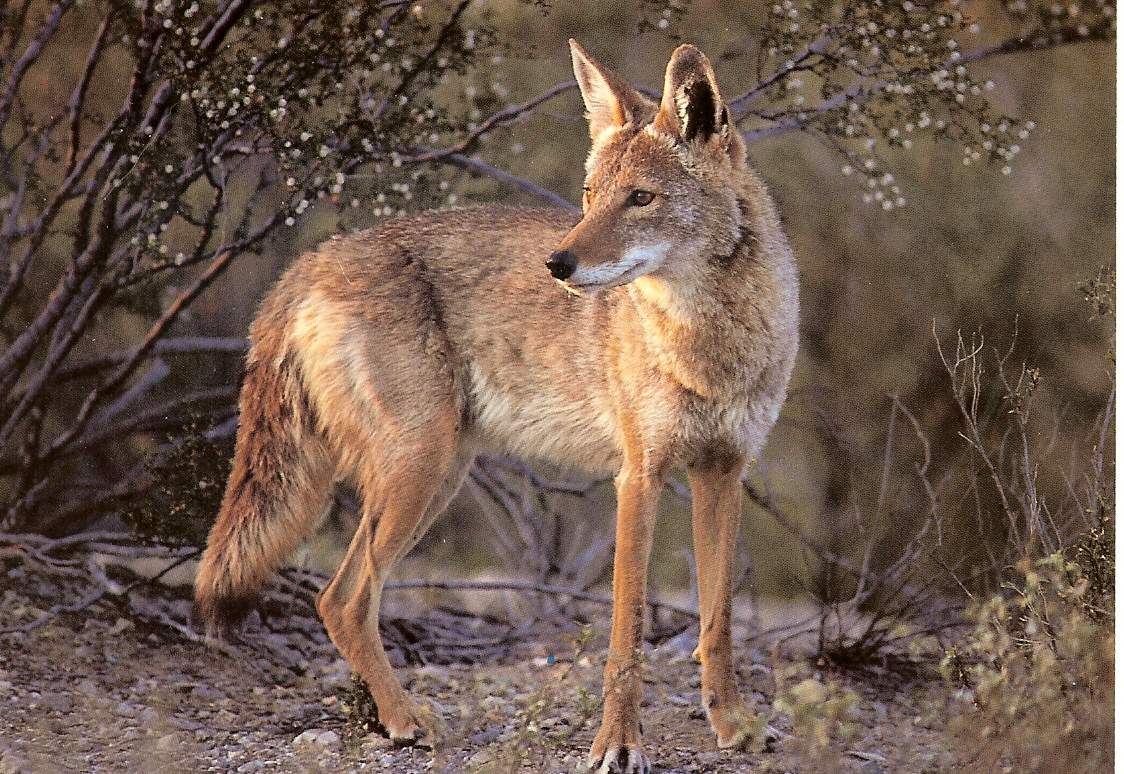
The coyote (Canis latrans) is a highly versatile species whose original range on the North American plains has expanded to all of North America, including urban areas, as well as Central and South America.
It has a varied diet consisting primarily of animal matter, including rodents, birds, reptiles, amphibians, fish and insects, though it may also eat fruit and vegetable matter on occasion. It is a very vocal animal, whose most iconic sound consists of a howl emitted by solitary individuals. Humans are their biggest enemies, although cougars, dogs, and gray wolves have been known to kill them as well. Coyotes sometimes mate with gray wolves to create a hybrid colloquially called “coywolves”.
The coyote is a prominent character in Native American folklore, usually depicted as a trickster — a picaresque hero who rebels against social convention through deception and humor. The animal was especially respected in Mesoamerican cosmology as a symbol of military might. After the European colonization of the Americas, it was reviled in Anglo-American culture as a cowardly and untrustworthy animal. Unlike the gray wolf, which has undergone a radical improvement of its public image, cultural attitudes towards the coyote remain largely negative. Because the coyote communicates with a dozen or more identifiable sounds, including its characteristic howl, it is sometimes known as “the song dog.” In the first video included here, we can hear a compilation of coyote calls; in the second, two coyotes bark as a warning against the person recording them.
Although coyotes rarely attack humans, small pets and farm animals are frequently stalked, killed, and eaten by coyotes. The best protection against this predation is a large dog which will instinctively protect the house or farmstead.
To learn more about what coyotes are saying when they bark, yip, and howl, see The Natural History of the Urban Coyote.
To learn how to deal with urban coyotes humanely, see the official Chanhassen, Minnesota website.
.
Poem copyright 2017 Chuck Taylor. Prose and compilation copyright 2017 Michael Simms.
Discover more from Vox Populi
Subscribe to get the latest posts sent to your email.
