
Vox Populi
A curated webspace for Poetry, Politics, and Nature with over 6,000,000 visitors since 2014 and over 9,000 archived posts.
Sam Hamill: Three Haiku by Issa
In the midst of this world
we stroll along the roof of hell
gawking at flowers
—
O autumn winds,
tell me where I’m bound, to which
particular hell
—
The distant mountains
are reflected in the eye
of the dragonfly
From The Sound of Water: Haiku by Basho, Buson, Issa, and Other Poets. Translated by Sam Hamill (Shambhala Centaur Editions). Reprinted by permission of the translator.
.
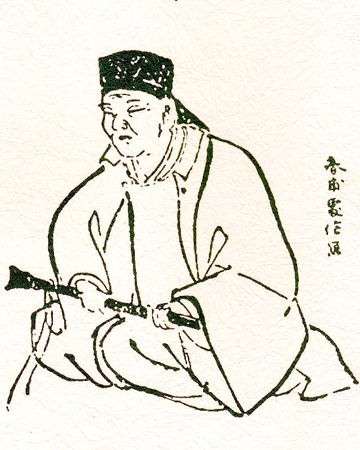
Japanese poet Kobayashi Issa ((1763–1828), also known as Kobayashi Yataro and Kobayashi Nobuyuki, was born in Kashiwabara, Shinanao province. He eventually took the pen name Issa, which means “cup of tea.” Issa’s father was a farmer. His mother died when he was young, and he was raised by his grandmother. His father remarried, and Issa did not get along well with his stepmother or stepbrother, eventually becoming involved in disputes over his father’s property. When Issa was 14, he left home to study haiku in Edo. He spent years traveling and working until returning to Kashiwabara in the early 1810s. In Kashiwabara, his life was marked by sorrow— the death of his first wife and three children, an unsuccessful second marriage, the burning down of his house, and a third marriage. Issa’s haiku are as attentive to the small creatures of the world—mosquitoes, bats, cats—as they are tinged with sorrow and an awareness of the nuances of human behavior.
[bio adapted from Poetry Foundation]
.
Discover more from Vox Populi
Subscribe to get the latest posts sent to your email.
