
Vox Populi
A curated webspace for Poetry, Politics, and Nature with over 6,000,000 visitors since 2014 and over 9,000 archived posts.
Audio: Allen Ginsberg’s first recorded reading of “Howl” (1956)
https://soundcloud.com/andreweststrate/allen-ginsberg-howl
Allen Ginsberg said in a 1985 interview that “Howl” began with another poem. Ginsberg, who had studied at Columbia University, sent a poem called “Dream Record, 1955” to poet and essayist Kenneth Rexroth.
“It still sounds like you’re wearing Columbia University Brooks Brothers ties,” Rexroth told Ginsberg. “You know, it’s too formal.” So, Ginsberg says, “I sat down and just started writing what I thought about.”
The resulting rush of violent, desperate words, starting with the well-known opening lines “I saw the best minds of my generation destroyed by madness,” created major ripples in the literary world.
Lawrence Ferlinghetti was at the Six Gallery to hear the 29-year-old Allen Ginsberg read “Howl” for the first time. Ferlinghetti owned City Lights, a bookstore and publishing house in San Francisco. He asked Ginsberg if he could publish “Howl,” and the first edition appeared in the fall of 1956. “‘Howl’ knocked the sides out of things,” Ferlinghetti later said.
Unfortunately, no audio exists of that first reading, but you can hear the first recorded reading of “Howl,” from February, 1956 at Portland’s Reed College. The recording sat dormant in Reed’s archives for over fifty years until scholar John Suiter rediscovered it in 2008. In it, Ginsberg reads his great prophetic work, not with the cadences of a street preacher or jazzman—both of which he had in his repertoire—but in an almost robotic monotone with an undertone of manic urgency. Ginsberg’s reading, before an intimate group of students in a dormitory lounge, took place just before the first printing of the poem in the City Lights edition.
The poem’s second printing, done in Britain, consisted of just 520 copies. All were seized by U.S. customs on March 25, 1957. When the U.S. district attorney in San Francisco refused to condemn the book, the local police arrested Ferlinghetti on charges of publishing and selling obscene material. In a long trial, the American Civil Liberties Union defended “Howl” with testimony by poets, editors, critics and university professors. Judge Clayton Horn ruled that the poem had redeeming social importance and was not obscene.
Allen Ginsberg died in 1997 at the age of 70. “Howl” is now considered a masterpiece of American culture with over a million copies in print.
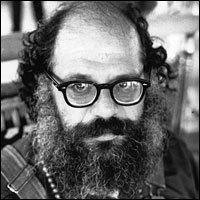
Ginsberg, seen here in 1973, read “Howl” in public for the first time at the Six Gallery in San Francisco.
Text adapted from National Public Radio.
Discover more from Vox Populi
Subscribe to get the latest posts sent to your email.

Howler Monkeys (To Allen Ginsberg)
We are all
Howler
Monkeys
Descendents
Of the original
Howling
Allen’s
Bastard
Children
Groping
In the Dark
For the short
Hairs
Licking
Unknown places
In search
Of answers
Wrapping
Long legs
Around
The openings
To deep spaces
Hoping
To fall
Into a trance
Of sweet
Oblivion
Longing
For a merging
Of the body
Heart
And soul
Inhaling
All possibilities
For an uninhibited
Road
To peace
But hesitating
At the crossroads
For
one
last
look
At hell
JRB
LikeLiked by 1 person