
Vox Populi
A curated webspace for Poetry, Politics, and Nature with over 6,000,000 visitors since 2014 and over 9,000 archived posts.
George Yancy and Joe Feagin: American Racism in the ‘White Frame’
George Yancy: To what extent does your work as a sociologist overlap or pertain to what we might concern ourselves with as philosophers?
Joe Feagin: I have been deeply concerned with issues of social and moral philosophy since college. I majored in philosophy as an undergraduate and then went to Harvard Divinity School, where I worked with philosopher-theologians in social ethics, European theology and comparative religions. I studied with Paul Tillich, Richard R. Niebuhr, Arthur Darby Nock and others. When I switched to doctoral work in sociology at Harvard, I studied with the theoreticians Talcott Parsons, George Homans, Robert Bellah, Charles Tilly and Gordon Allport. Allport and his young colleague Tom Pettigrew got me seriously interested in studying racial-ethnic theory in social science as well as the empirical reality of racism in the United States. During this decade (the 1960s) I was also greatly influenced by major African-American social analysts of racism, like W.E.B. Du Bois, Stokely Carmichael and Charles Hamilton. More recently, my work has been used by philosophers of race including Lewis Gordon, Charles Mills, Linda Alcoff, Tommy Curry — and yourself.
To understand well the realities of American racism, one must adopt an analytical perspective focused on the systemic white racism that is central and foundational to this society.
G. Y.: In your book “The White Racial Frame,” you argue for a new paradigm that will help to explain the nature of racism. What is that new paradigm and what does it reveal about race in America?
J.F.: To understand well the realities of American racism, one must adopt an analytical perspective focused on the what, why and who of the systemic white racism that is central and foundational to this society. Most mainstream social scientists dealing with racism issues have relied heavily on inadequate analytical concepts like prejudice, bias, stereotyping and intolerance. Such concepts are often useful, but were long ago crafted by white social scientists focusing on individual racial and ethnic issues, not on society’s systemic racism. To fully understand racism in the United States, one has to go to the centuries-old counter-system tradition of African-American analysts and other analysts of color who have done the most sustained and penetrating analyses of institutional and systemic racism.
G.Y.: So, are you suggesting that racial prejudices are only half the story? Does the question of the systemic nature of racism make white people complicit regardless of racial prejudices?
J.F.: Prejudice is much less than half the story. Because prejudice is only one part of the larger white racial frame that is central to rationalizing and maintaining systemic racism, one can be less racially prejudiced and still operate out of many other aspects of that dominant frame. That white racial frame includes not only racist prejudices and stereotypes of conventional analyses, but also racist ideologies, narratives, images and emotions, as well as individual and group inclinations to discriminate shaped by the other features. Additionally, all whites, no matter what their racial prejudices and other racial framings entail, benefit from many racial privileges routinely granted by this country’s major institutions to whites.
G.Y.: The N.A.A.C.P. called the murder of nine African-Americans in the historic Emanuel A.M.E. Baptist Church in Charleston, S.C., an “act of racial terrorism”? Do you think that definition is correct?
J.F.: According to media reports, the alleged murderer Dylann Roof has aggressively expressed numerous ideas, narratives, symbols and emotions from an openly white supremacist version of that old white racial frame. The N.A.A.C.P. terminology is justified, given that the oldest terrorist group still active on the planet is the Ku Klux Klan. We must also emphasize the larger societal context of recurring white supremacist actions, which implicates white Americans more generally. Mainstream media commentators and politicians have mostly missed the critical point that much serious anti-black and pro-white framing proclaimed by supremacist groups is still shared, publicly or privately, by many other whites. The latter include many whites horrified at what these white terrorist groups have recently done.
G.Y.: I realize that this question would take more space than we have here, but what specific insights about race can you share after four decades of research?
J.F.: Let me mention just two. First, I have learned much about how this country’s racial oppression became well institutionalized and thoroughly systemic over many generations, including how it has been rationalized and maintained for centuries by the broad white racist framing just mentioned. Another key insight is about how long this country’s timeline of racial oppression actually is. Most whites, and many others, do not understand that about 80 percent of this country’s four centuries have involved extreme racialized slavery and extreme Jim Crow legal segregation.
As a result, major racial inequalities have been deeply institutionalized over about 20 generations. One key feature of systemic racism is how it has been socially reproduced by individuals, groups and institutions for generations. Most whites think racial inequalities reflect differences they see as real — superior work ethic, greater intelligence, or other meritorious abilities of whites. Social science research is clear that white-black inequalities today are substantially the result of a majority of whites socially inheriting unjust enrichments (money, land, home equities, social capital, etc.) from numerous previous white generations — the majority of whom benefited from the racialized slavery system and/or the de jure (Jim Crow) and de facto overt racial oppression that followed slavery for nearly a century, indeed until the late 1960s.
G.Y.: What then are we to make of the concept of American meritocracy and the Horatio Alger narrative — the rags to riches narrative?
J.F.: These are often just convenient social fictions, not societal realities. For centuries they have been circulated to justify why whites as a group have superior socioeconomic and power positions in American society. In the white frame’s pro-white subframe whites are said to be the hardest-working and most meritorious group. Yet the sociologist Nancy DiTomaso has found in many interviews with whites that a substantial majority have used networks of white acquaintances, friends and family to find most jobs over their lifetimes. They have mostly avoided real market competition and secured good jobs using racially segregated networks, not just on their “merit.” Not one interviewee [out of approximately 150 to 200] expressed seeing anything wrong with their use of this widespread system of white favoritism, which involves “social capital” passed along numerous white generations. [continue reading]
—
Copyright 2015 George Yancy. First published in the New York Times and republished in Vox Populi by permission of George Yancy.
 George Yancy
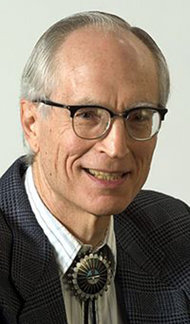 Joe Feagin
Discover more from Vox Populi
Subscribe to get the latest posts sent to your email.
