
Vox Populi
A curated webspace for Poetry, Politics, and Nature with over 6,000,000 visitors since 2014 and over 9,000 archived posts.
George Yancy and Molefi Kete Asante: Why Afrocentricity?
.
Molefi Kete Asante, a professor of African-American studies at Temple University, is known for his pioneering work in the area of Afrocentricity. He is the author of more than 70 books, including “As I Run Toward Africa,“ a memoir. George Yancy is a professor of philosophy at Duquesne University. He has written, edited and co-edited numerous books, including “Black Bodies, White Gazes,” “Look, a White!” and “Pursuing Trayvon Martin,” co-edited with Janine Jones..
George Yancy: From an Afrocentric perspective, how do you define race in America?
Molefi Kete Asante: Race in America is a psychological, physical and social location for determining the conditions of one’s current and future life. This is because America’s benefits and privileges have been structured around race and its markers for difference. Those markers, largely physical, identify some people as being privileged and others as being victims. As a central concept in America’s history, race has always been an arena for selecting who will eat and who will not eat or for determining the quality and condition of a group’s possibilities.
G.Y.: Given the recent killings of unarmed black people by white police officers, does Afrocentricity provide a prescription of any sort for eliminating racism?
In Baltimore people took to the streets and seized the space, the time, the limelight of the media and the assertive rhetoric of action that demanded change in the system.
M.K.A.: Afrocentricity as an intellectual idea takes no authority to prescribe anything; it is neither a religion nor a belief system. It is a paradigm that suggests all discourse about African people should be grounded in the centrality of Africans in their own narratives. However, the warrant “given the recent killings of unarmed black people by white police officers” is part of a continuing drama in America; its contemporary emergence is simply a recent exposure through popular media.
When one asks about the elimination of racism, then the concentration cannot be on African people but on the perpetrators of racism. Who acculturates racists? What does a white child learn about privilege? How can we dismantle the apparatus that supports white exceptionalism in a multicultural society? It will take really bold and courageous action to bring about several key components of a national will to overcome racism. It must mean an acceptance of the fact that racism is a principal fact of American life.
It also necessitates an embrace of all national cultures in the country in a defiant act of seeking to contest ignorance in all arenas. This is what the brilliant people of Starbucks attempted to do recently by having their baristas engage customers in conversations about race to the utter disgust of the racist class. Thus, in the end, to eliminate racism will also require a rewriting of our understanding of the United States of America from the perspective of the oppressed, the violated and the marginalized. The Native Americans must be folded into the discussion of racism because they lost an entire continent based on racism as a location of what their future conditions should be.
Of course, you cannot do any of this if you seek to whitewash the facts of American history. Institutions should and could support the least powerful and thereby redress a thousand wrongs. I would like to see politicians open the discussion on reparations for 246 years of enslavement.
The question of the killing of black men by police is not a recent one; it is more in view now because of the new social media. I am afraid that the country has not overcome the pockets of racist fear-mongers who are happy to kill African-Americans in the tradition of the old K.K.K. I personally believe that some K.K.K.-style racists have found homes inside police forces and are now called “systematic failures.” Removing racists, these “systematic failures,” from police departments is rightly the work of criminal-justice scholars, some of whom spend too much time seeking to criminalize black people. Consequently statements about mechanized forces, better training, mistaken shootings by reserve deputy police and aggravated behavior miss the point of dealing with rogue police officers who get an adrenalin rush by subduing black males with deadly force. [continue reading]
—
copyright 2015 George Yancy. Reprinted from The New York Times with the permission of George Yancy.
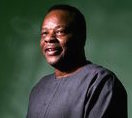
—Molefi Kete Asante
Discover more from Vox Populi
Subscribe to get the latest posts sent to your email.
