
Vox Populi
A curated webspace for Poetry, Politics, and Nature with over 6,000,000 visitors since 2014 and over 9,000 archived posts.
Major General Walter Stewart (U.S. Army, ret.): Chris Kyle did not live long enough
Sniper Chris Kyle did not live long enough. I don’t say this in the context of his and Chad Littlefield’s senseless murder at the hands of a supposed brother-in-arms, but in the context of the American Sniper movie trailer that has Kyle saying, “I’m willing to meet my Creator, and answer for every shot that I took.” If this statement is accurate — and I have not read the book or watched the movie — Kyle died before he had time to think it over.
In 1985, I visited the Vietnam War Memorial in Washington, D.C. There I came across a poem written by a veteran named Pudd, a gunship pilot, call sign Croc 4, 119th Assault Helicopter Company, RVN 1970. In his poem, which I’ve included below, Pudd laments the costs of war and implicitly urges us to take better care when we send our youth to kill on our behalf. Memories such as these don’t fade over time. I should know: I was a gunship pilot in Vietnam the same year as Pudd.
The framers of our Constitution clearly intended the care of which I speak to come in the form of an Article I declaration of war — as I’ve said before, if our wars are not worth declaring, they are not worth fighting. Forget the emptiness of “authorizations for the use of military force (AUMF)” and the equally vacuous “thank you for your service” platitudes. The absurdity of the former is revealed in the current debate about authorizing war on ISIS six months after we started making it and the latter by the 99% coasting while the 1% licks its wounds and buries its dead.
Was Pudd’s poem written for me? Yes, and for all of my brothers and sisters, then and now. It was written for Kyle and Chad, and for the 19-year-old grunt sorting the chunks of “collateral damage” from artillery or air strikes in Iraq or Afghanistan. It was written for drone pilots who see what they kill and who are reportedly having problems with it. It was written for veterans who, ever after, struggle to fit in a civilized world.
And it was written for the nation’s neocon chickenhawks and breast-thumping warmongers, the Cheneys, the Hannitys, the Kristols, those who made it all possible. These American monsters have killed so many and lived, even as their victims continue to die. Even as veterans like Pudd continue to mourn.
—
Walt Stewart rose from a private in the army of regulars, reservists, and draftees raised to fight in Vietnam, to a major general serving with the thousands of citizen-soldiers of the 28th Infantry Division, Pennsylvania Army National Guard. Now retired, Stewart is a strong advocate for a citizen-military and a saner world.
—
Gunships
(Pudd, Croc 4, Crocodile Guns, 119th AHC, 1970)
Guilt
for not getting there soon enough to save some
for having to leave station too soon and losing more
for killing so many
for not killing more of them to save more of us
for living while they all died
for leaving comrades behind without cover, while I went home
for forgetting the names of my friends who died
for turning away from those who meant so much to me in the Nam—after our return—
because they knew me too well
Only now am I able to begin to mourn
for those I couldn’t cover
for my enemy, whom I killed and whom I now can only think of as other men
for my friends lost to my isolation
We were boys revelling in the terrible power of our gunships. Alive and living by our wits and our skills. Knit close in our dependency yet each alone with his fears and unable to show them to anyone—not even his wingman.
Not able to ask for help and support from anyone—not even his wingman.
Alone.
After returning home forced by a country that didn’t care, to put all these things away, to collect interest. So that now, when debts must finally be paid, the price is so very dear. Costing friends, a wife and years without living fully—and doing it without the cover of a wingman.
Alone.
Only now, 15 years later, I’m learning that I have feelings. The first to come are hurt for all the losses, past and present, and fear that people will turn away in horror and disgust if they see the real me, without all my defenses in place—a killer without absolution.
I don’t wish to forget. I only want to be rid of the guilt and be comfortable with the memories—bad and good. By starting to mourn, I start down a path that will allow me to forgive myself and make it unimportant that this country failed to bring its soldiers home. I will bring myself home. Not alone, but with the help of others who were there—We’ll bring each other home.
—
Reprinted from The Contrary Perspective with permission.
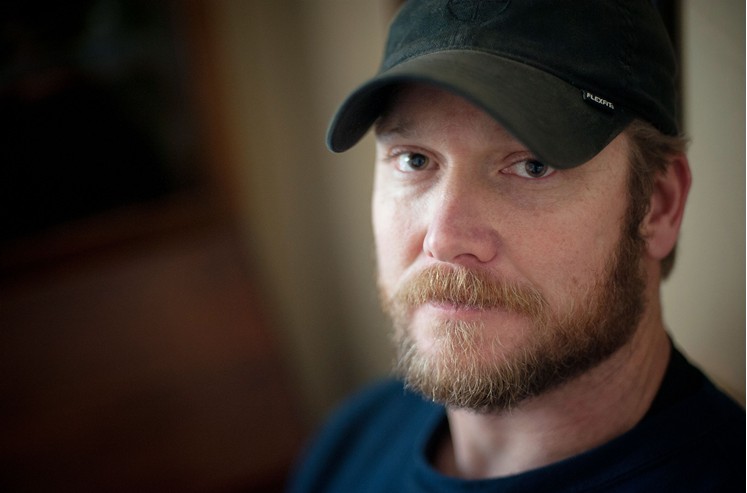
— Chris Kyle
Discover more from Vox Populi
Subscribe to get the latest posts sent to your email.
