
Vox Populi
A curated webspace for Poetry, Politics, and Nature with over 6,000,000 visitors since 2014 and over 9,000 archived posts.
Djelloul Marbrook: Once We Had a Press that Gave a Damn
When I worked as an editor at the once great Baltimore Sun in the 1960s our style book prohibited use of the word rapist, preferring raper. Some of us thought this a bit fusty. The Associated Press stylebook approved of rapist. So we had to change wire stories.
The Sun, where the curmudgeonly stylist H.L. Mencken had worked, had grammatical reasons, but in retrospect I find that the ”ist” ending calls up associations that make a compelling case for The Sun’s preference.
We say artist, we say projectionist, columnist, fascist, stylist, communist, and these words convey a sense of craft or dedication. The argument for using rapist instead of raper rests with the first of three definitions of the ist suffix in Merriam-Webster: a person who does a specified action or activity. The next two definitions cast some doubt: a person who makes or produces something specified; a person who plays a specified musical instrument.
The Sun—and Mencken—argued that rapist confered some sort of sanction such a person does not deserve. The Sun, I should say, also preferred escaper to escapee, but for somewhat different reasons. An escapee might be taken to refer to a fait accompli, while an escaper is in the act of escaping.
More than 950 English words end in the suffix ist. Other possible suffixes for nouns are or, er, ant, and ian.
There was a time when copy editors used calculating machines to double-check fiscal stories, a time when they used Merriam Webster on almost every story, a time when they questioned reporters about contradictions and omissions in their stories.
The Sun, when it was independently owned and compared favorably with The New York Times, had a test for newsroom job applicants that asked them to identify a 13th Century Provence tapestry. I know because I was one of the few applicants who got the answer right.
We say terrorist, jihadist, phalangist, and we mean these words pejoratively; is that then a case for using the word rapist? Does the word somehow suggest artistry? We wouldn’t say murderist, we’d say murderer. We wouldn’t say molestist, we’d say molester. But at the end of the day, isn’t it lovely to recall when we had a press that gave a damn about such distinctions? Now we have a corporado press, but we don’t call them corporatists, do we? No, instead we admire their coiffures, their gorgeous self-absorption, and call them sir. We exult in their crimes, while prosecuting kids for their first mistake.
I would argue that we ought to use the Arabic word jihadi in preference to jihadist on the grounds that jihadist implies some sort of profession, whereas, in my view at least, most jihadis are simpleminded murderers. The West understands the word jihad to mean holy war, but the Arabic word for war is actualy al harb. Jihad means striving.
But I would more exactingly press for a different word altogether because the words jihadi or jihadist, as the Western press is using them, address only a very small part of the total meaning and misconstrue more than they enlighten. A true jihadi is a seeker after enlightenment; his war is against the alam al mithal, the world of illusion. The true jihadi wages war against his or her own most worldly instincts, greed, for example. He or she is a spiritual voyager. The West is demeaning and defaming the word, just as it is desecrating the exquisite Arab script by demonizing it, associating it with menace rather than beauty and striving for meaning.
This xenophobic demonization extends to imagery as well. Arabic script is now throughly associated in the Western mind, not with the art of calligraphy, not with translating the classical world, but with dread. Beards and turbans and robes are similarly associated with a foreign evil. In the same way, German uniforms and Gothic script were demonized as typifying an enemy and genocidal ethos.
We never stop to think that the cyborg look of our special forces might be similarly demonized, that the sound and look of our own language might also be employed to propagandize against us.
The Bedouin Arab is a night traveler, accustomed to finding his way by the stars. The Arabs are equally great seafarers and used celestial navigation long before the West. The Arabs were accustomed to studying the horizon, the crests of sand dunes and waves, and it is possible that their flowing right-to-left script derives from this ancient experience.
But through our carelessness with words we discard the possibility of enlightening ourselves with this kind of knowledge. Words should expand our intellectual reach, not shrink it. By reducing knowledge to simplicitude, we bathe in our contempt for all that has happened and is happening. We claim that we know better, that we can explain everything with six easy facts or ten simple reasons. We see that every day in the press, the pretense of edifying in a few easy and invariably misdirecting steps. We deceive no one more than ourselves.
It matters whether a person who rapes is called a rapist or a raper. It matters whether a murderer is a jihadist or a jihadi or, say, a hateful fundamentalist. And that opens another door the press would rather remain shut. The West has its own hateful, murderous fundamentalists, and it is not calling them jihadists, because they look more like our nincompoop Congress than men in beards and turbans. These people are also simpletons, reductionists. And they are certainly fanatics. So here we are, lost in an embroglio of misapplied and misdirecting words that heighten our anxieties and suspicions but do not shed light.
—
copyright 2015 Djelloul Marbrook
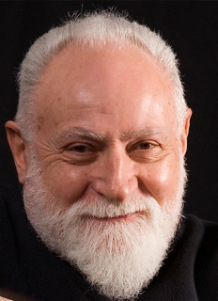
Djelloul Marbrook worked as a Navy journalist and photographer, as a reporter-photographer and bureau manager for The Providence Journal, executive metro editor for The Elmira (NY) Star-Gazette, copy editor for The Baltimore Sun, Sunday managing editor for The Winston-Salem Journal-Sentinel, writer for the National Journal, copy editor for The Washington Star, and executive editor for six Media News daily newspapers in Ohio and two daily newspapers in New Jersey. He also co-founded Education Funding News, a Washington-based, newsletter about federal involvement in education.
Discover more from Vox Populi
Subscribe to get the latest posts sent to your email.

I keep trying to respond the regular way, but still all sorts of problems. The discussion/argument re the word raper/rapist is cool but there is also the issue I address below. Thanks again for the great posts! “Shockingly, my otherwise fine, still usable Webster’s New World 1984 Dictionary defines rape as “the crime of sexual intercourse with a woman or girl forcibly and without her consent.” There has been little accounting of forcible adult male sex with boys, a blatant bias and tragic inaccuracy of patriarchal scholarship. I’ve actually heard men exclaim that this is not homosexuality!” from my Prologue to The Visit, to be published this spring. Sharon Doubiago From: Vox Populi To: sharondoubiago@yahoo.com Sent: Saturday, February 7, 2015 2:05 AM Subject: [New post] Djelloul Marbrook: Once We Had a Press that Gave a Damn #yiv1849765045 a:hover {color:red;}#yiv1849765045 a {text-decoration:none;color:#0088cc;}#yiv1849765045 a.yiv1849765045primaryactionlink:link, #yiv1849765045 a.yiv1849765045primaryactionlink:visited {background-color:#2585B2;color:#fff;}#yiv1849765045 a.yiv1849765045primaryactionlink:hover, #yiv1849765045 a.yiv1849765045primaryactionlink:active {background-color:#11729E;color:#fff;}#yiv1849765045 WordPress.com | Michael Simms posted: “When I worked as an editor at the once great Baltimore Sun in the 1960s our style book prohibited use of the word rapist, preferring raper. Some of thought this a bit fusty. The Associated Press stylebook approved of rapist. So we had to change wire stori” | |
LikeLike
Reblogged this on Mindfire Cantata.
LikeLike