
Vox Populi
A curated webspace for Poetry, Politics, and Nature with over 6,000,000 visitors since 2014 and over 9,000 archived posts.
Clifford Thompson: Improvising America
For years, as an African-American, I sought to figure out my cultural identity. My manner and lifestyle went against what many think of as the way a “real” black person acts and lives: I did not speak so-called Black English, and my interests often placed me in mostly white circles. I internalized many people’s idea that I was not “really” black. While I did not consider myself to be – or want to be – white, I was unable to find a definition of blackness that included me. Though I was fairly knowledgeable about black history and proud of my heritage, I was confused about what, beyond skin color, constituted the basis for a black identity.
A fan of jazz, I eventually realized that this music I loved was both a product of, and metaphor for, the black American story – and represented the tradition for which I had searched. Created by black Americans, this music, with its basis in improvisation, paralleled the improvisation at the root of America. Improvising, after all, means making a way where there wasn’t one before, which is how the U.S. Constitution, how America itself, was born. By exploring jazz, I was celebrating both my black heritage and my Americanness.
More secure in my identity, I was able to explore the arts of other cultures, American and foreign. I was also able to draw parallels between jazz and other art forms. I have written in one published essay, for example, that the spare style of the jazz tenor saxophonist Lester Young has much in common with the prose style of the great writer Ernest Hemingway: whereas Young would construct a melody that suggested chords without playing every note in them, Hemingway often alluded to events in stories without spelling them out; both artists, in Hemingway’s words, left the reader or listener “feeling more than he understood.” Such connections, for me, underscore the commonalities across all cultures and the essential oneness of all humanity.
I feel it is vital to keep sight of this oneness at all times, even – especially – in challenging times like these. As we consider how to respond to events like those in Ferguson, Missouri, the idea of oneness should inform our efforts. The best kind of black struggle also includes a gender-equality struggle and a gay rights struggle; to fight against anti-Semitism should also be to oppose anti-black violence – because it should all be part of striving for human dignity. There is strength in numbers.
— by Clifford Thompson writing for Vox Populi
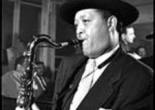
Lester Young
Discover more from Vox Populi
Subscribe to get the latest posts sent to your email.
