
Vox Populi
A curated webspace for Poetry, Politics, and Nature with over 6,000,000 visitors since 2014 and over 9,000 archived posts.
Cesare Pavese: Passion for Solitude
Translated by William Arrowsmith
I eat a bite of supper beside the open window.
The room is dark now, you can see the sky.
Step outside, and the quiet streets will take you
quickly, after a little walk, into open country.
I eat and look at the sky—think of all the women
eating supper now!—and my body rests.
Drudgery deadens my body, it deadens women too.
Outside, after supper, the stars will appear,
touching the earth on the great plain. The stars are alive,
but are not worth these cherries which I eat alone.
I see the sky, but I know the lights are shining
among the reddish roofs, and there are sounds below.
A healthy gulp, and my body tastes the life
of trees and brooks, and feels cut off from everything.
A little silence, and everything is arrested
in its real place, the way my body rests.
Everything stands isolated before my senses,
which accept it calmly: a rustling of silence.
There’s nothing in this darkness I couldn’t know,
the way I know my blood is running through my veins.
The plain is a great running of water through the grass,
a supper of all things. Every plant, every stone
lives and rests. I hear my food nourishing my veins
with all the things that live upon this plain.
Night makes no difference. My square of sky
whispers to me of all the sounds, and a tiny star
is struggling in the sky, far from food and home:
a different thing from me. It isn’t self-sufficient,
it needs too many companions. Here, in the dark, alone,
my body rests and feels it is the one master of itself.
~~~~
From Hard Labor by Cesare Pavese. Translation copyright 1976 by the estate of William Arrowsmith. Published by New York Review Books.
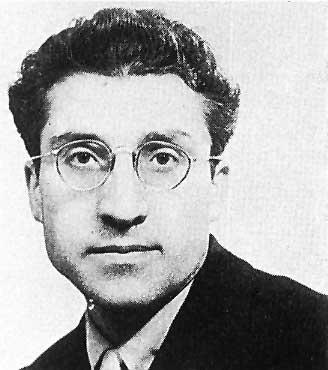
In the spring of 1935, the young Cesare Pavese was sentenced, for “antifascist activities,” to three years of detention in a small seaside village in Calabria. Far away from his familiar life in the city of Turin and forced to rely on his own resources, he began to write poems of tremendous power, in terse lines and unsentimental language, giving voice to country people and hard country lives untainted by the propaganda of Fascism. Pavese is widely regarded as one of the foremost writers in twentieth-century Italian cultural history, and in particular as an emblematic figure: an earnest writer maimed by fascism and struggling with the modern existentialist dilemma of alienated meaning. Pavese’s first book, a collection of poems titled Lavorare stanca or “Hard Labor,” appeared in 1936, shortened by four poems deleted by fascist censors. Seven years later, Pavese published an expanded version nearly double the size of the original. Pavese is widely regarded as a modern “mythic” poet, who bridged the gap between the general and the particular, the past and the present, and external and internal experience, by means of a personal mythology. He called his poetry “an attempt to express a cluster of fantastic associations, of which one’s own perception of reality consists, with a sufficient wholeness.” (adapted from The Poetry Foundation and other sources)
Discover more from Vox Populi
Subscribe to get the latest posts sent to your email.

A beautiful way to begin the morning. Thank you. A lovely coincidence as the other night I had just taken down to read my 1979 version of Hard Labor, the Arrowsmith translated edition. I believe my life too was changed on reading this book in my twenties. Pavese is a poet for our times, for all time.
LikeLiked by 2 people
Thank you, Catherine.
LikeLike
Such exquisite intimacy with solitude, but also with every single awareness of “the moment”. And what brilliance in his description of silence by giving it z sound: “a rustling of silence”. This is — I know it, what will be my leitmotiv all day (it’s only 6:30am here). A rustling of silence….
LikeLiked by 4 people
Beautifully said, Laure-Anne. Thank you.
LikeLiked by 1 person
excuse the typo. The “z” should be an “a”. (Strange how that typo holds the whole alphabet between those two letters!)
LikeLiked by 2 people
A poet imprisoned by more than walls, by censorship, by the heavy load of fascism on his shoulders, writing ‘around’ what he isn’t allow to say. “Everything stands isolated before my senses, / which accept it calmly: a rustling of silence. / There’s nothing in this darkness I couldn’t know, / the way I know my blood is running through my veins.” And he takes himself into nature, freeing himself by imagining how it could be: “Outside, after supper, the stars will appear, / touching the earth on the great plain. The stars are alive, / but are not worth these cherries which I eat alone.” A brilliant, ‘deliberate’ poet.
LikeLiked by 6 people
Yes, I feel it too: the underlying tension, the feeling of isolation.
LikeLiked by 1 person
I like the way Pavese finds a way to move from isolation to connection without glorifying the stars; yet there’s irony, I believe, in the concluding line and the poet’s recognition of limitation, which strengthens the poem.
LikeLiked by 3 people
Yes, isolation and self-reliance pull against each other…
LikeLiked by 1 person
Love Pavese!
LikeLiked by 3 people
I do too, Jason. When I was in my early twenties, I read Hard Labor and the book, no exaggeration, changed my life. So glad I’m able to publish the poems here for everyone to read.
LikeLiked by 3 people